


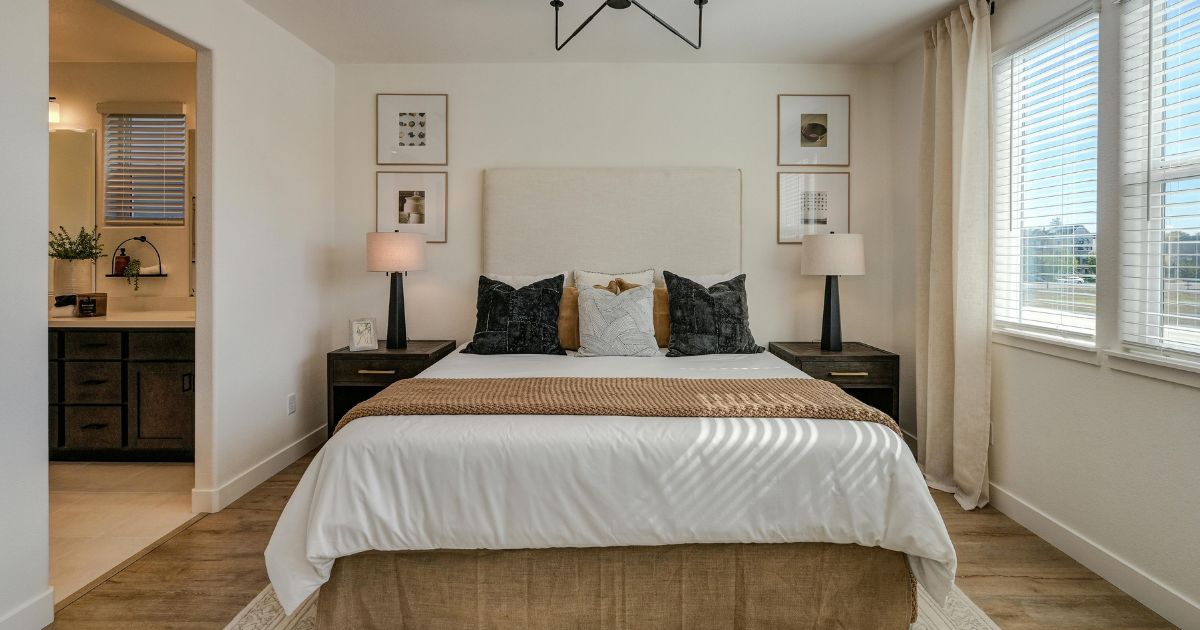
If you are designing or renovating a hospitality property, stop investing only in aesthetics.
Reviews are won or lost inside the bedroom — not because of missing design appeal, but because of missing functionality.
Whether you are renovating a hotel, villas, or an Airbnb apartment, investing in the right sleep infrastructure should be a strategic priority. It increases positive ratings, strengthens competitive positioning, and directly improves guest satisfaction.
Below are the five critical elements that determine whether your guests simply stay… or truly rest.
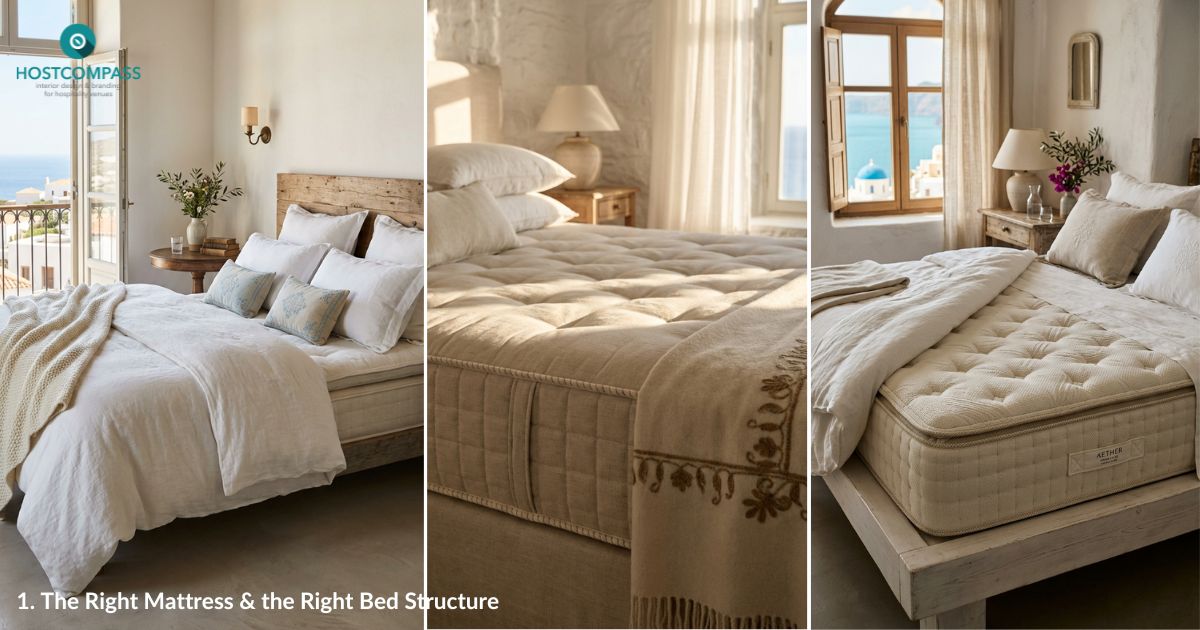
1. The Right Mattress & the Right Bed Base
In hospitality design, the bedroom defines the actual renewal experience.
A mattress is not an equipment choice. It is a business decision.
A medium-firm mattress typically accommodates a wider range of body types and sleeping preferences. Combined with a stable, high-quality bed base, it ensures durability, structural integrity, and long-term performance.
Equally important is bed height. A total height of 45–55 cm enhances accessibility, comfort, and ergonomic ease of use.
When sleep quality improves, review scores follow.
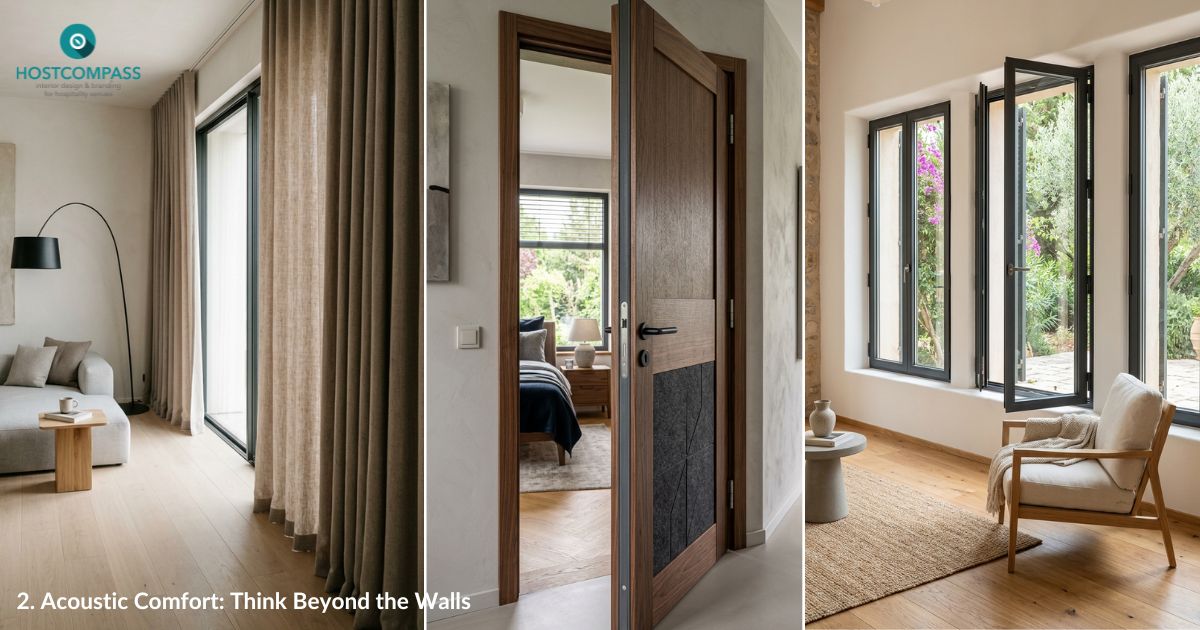
2. Acoustic Comfort: Think Beyond the Walls
Soundproofing is not just about walls.
In hotels and short-term rentals, acoustic performance depends on the entire room envelope: walls, doors, windows, and soft materials.
The goal is not absolute silence. The goal is controlled noise transmission.
Strategic architectural solutions may include:
• Double drywall with mineral wool insulation
• Anti-vibration tapes in metal framing
• Solid-core doors with perimeter seals
• High-performance window frames with elevated Rw ratings
Soft elements such as upholstered headboards, heavy curtains, wall fabrics, and carpets also function as natural sound absorbers.
Acoustic comfort equals perceived privacy — and perceived privacy significantly affects guest satisfaction.
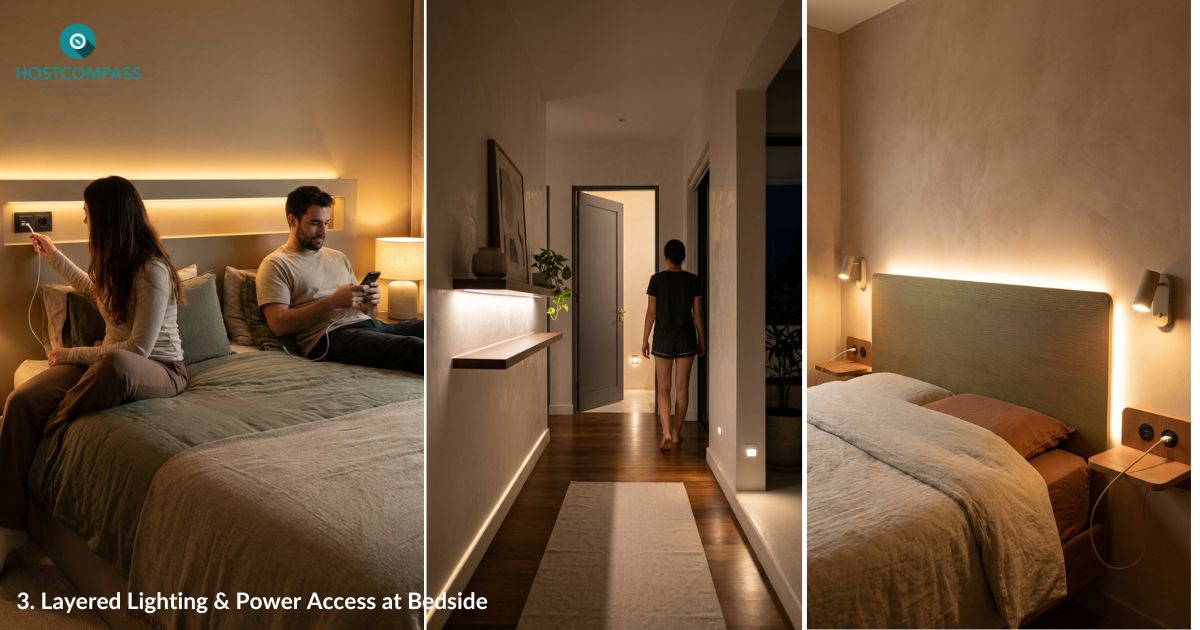
3. Layered Lighting & Power Access at Bedside
Lighting in hospitality bedrooms must be intentional and layered.
A single ceiling fixture is not enough.
A well-designed system includes:
• Ambient lighting for atmosphere
• Task lighting for reading
• Subtle night lighting for movement without disturbance
Integrated wall sconces with dimmers or touch controls allow guests to adjust lighting without leaving the bed — a small detail with major experiential impact.
Power outlets, USB, and Type-C ports should be positioned at bedside height to eliminate visible cables and enhance convenience.
Functionality here translates directly into comfort perception.
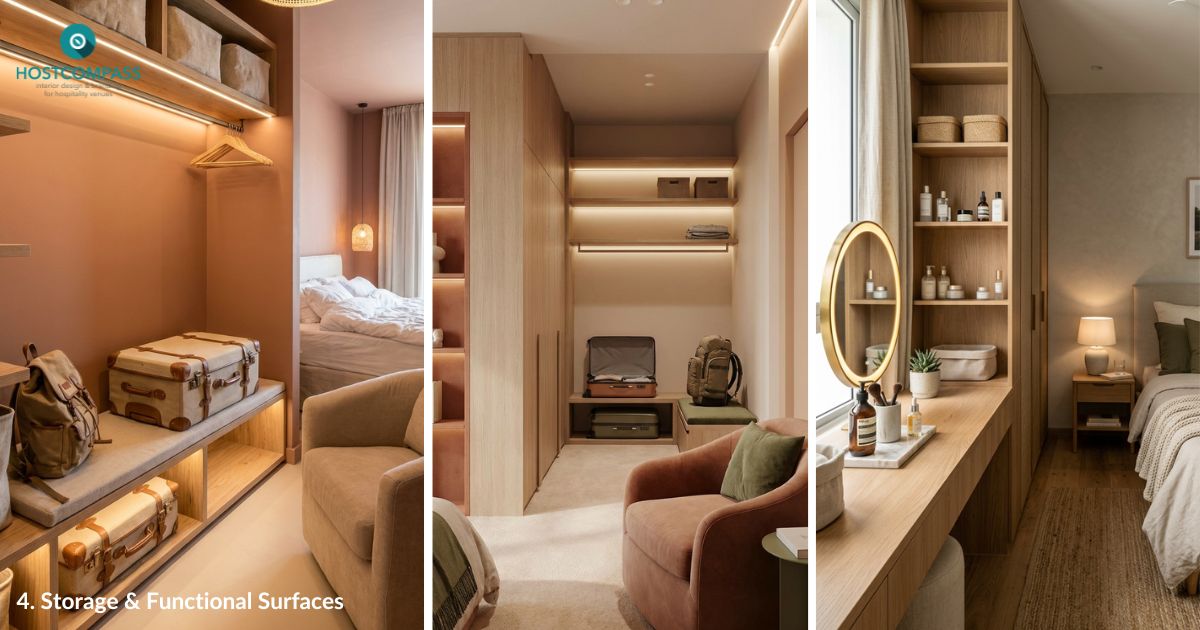
4. Storage & Functional Surfaces
Storage is not secondary. It is experiential.
The first practical question:
Where does the suitcase go?
An integrated luggage bench (45–50 cm height) protects flooring and improves usability. Provide a surface for laptops and daily-use items, while incorporating hidden storage under the bed or within multifunctional furniture.
Wardrobes should have:
• Minimum depth of 60 cm
• Adequate hangers
• Dedicated shelf space for carry-on luggage
In compact rooms, custom sliding systems or open wardrobe concepts reduce visual bulk and maintain clean architectural lines.
Well-organized storage increases perceived space, enhances order, and improves overall room functionality.
Guests may not consciously analyze it — but they feel it.
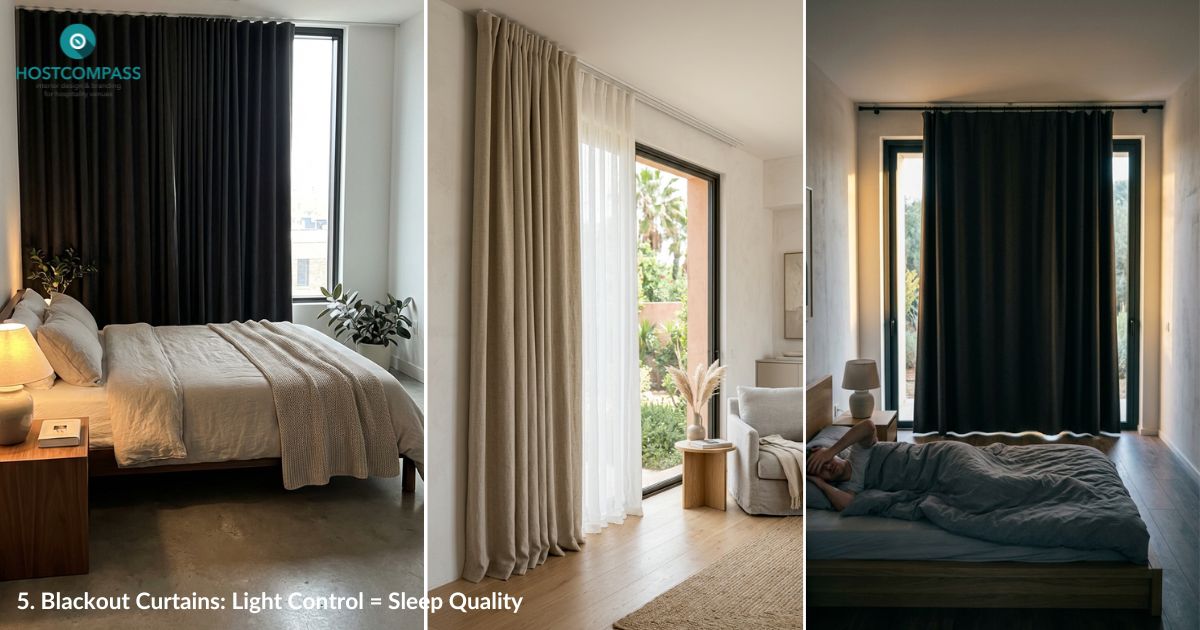
5. Blackout Curtains: Light Control = Sleep Quality
Natural light control directly affects sleep quality.
Blackout curtains are not decorative elements. They are hospitality performance tools.
Specify:
• 100% blackout fabrics, or
• Dual systems (sheer + blackout) for daytime flexibility
Ceiling-mounted tracks extending from ceiling to floor reduce lateral light leakage and visually elevate room height. For optimal integration, a recessed curtain pocket within gypsum board construction ensures architectural refinement.
When a guest wakes up naturally — not because of unwanted light — the stay is remembered differently.
In Conclusion...
The bedroom is not just another room in your property.
It is the moment of truth in your hospitality experience.
Mattress. Acoustics. Lighting. Storage. Blackout systems.
These are not isolated design elements.
They form a sleep experience system.
When this system functions seamlessly, guests do not analyze it — they simply rest.
And when they truly rest, they leave positive reviews without being asked.
Check our video on YOUTUBE, below :


Evangelia Papadimitriou


