


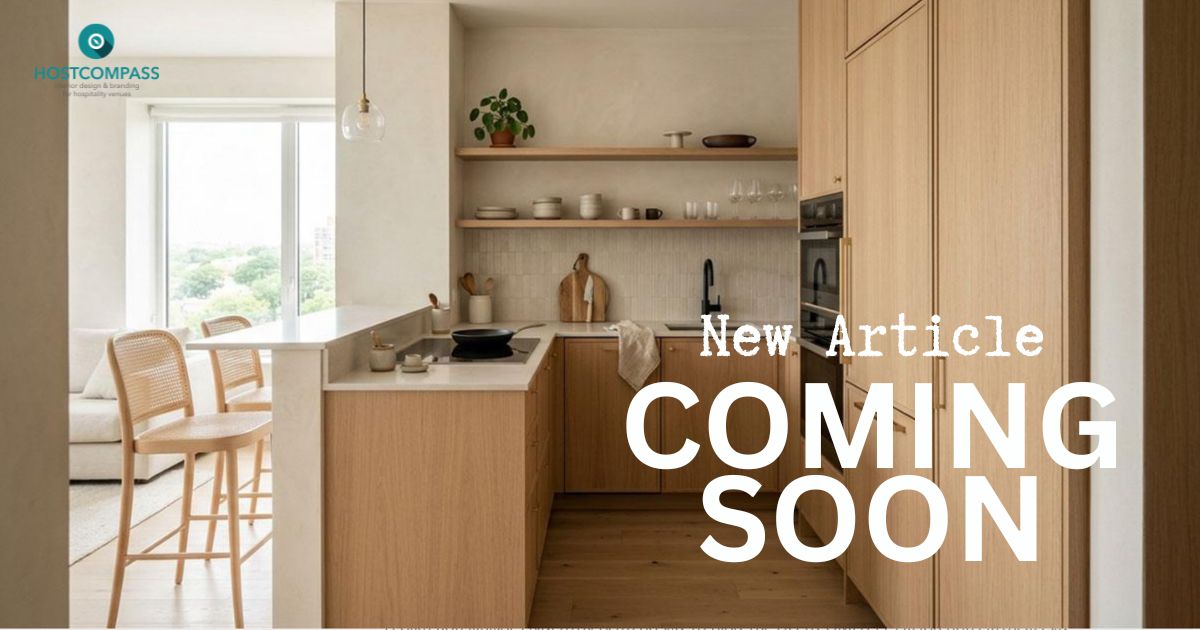
How to upgrade the kitchen of a short-term rental property, improving the guest experience without necessarily investing in a complete renovation.
The kitchen is one of the spaces often designed primarily around how it looks in photographs. Beautiful cabinets, an impressive countertop, contemporary lighting. However, once the guest arrives, the true value of the kitchen is measured elsewhere: whether they can easily prepare breakfast, find everything they need, enjoy their coffee or work on their laptop without feeling restricted by the space.
The challenge for a short-term rental property owner, property manager or real estate investor is not to have the most modern kitchen. It is to invest in the right improvements so that the kitchen serves multiple needs, is easy to clean and enhances the overall appeal of the property, creating a genuine hospitality experience within the accommodation.
1. Choose materials that look beautiful but withstand everyday use
In a short-term rental property or hotel, aesthetics must go hand in hand with durability and easy maintenance.
I recommend using matte finishes and textures that minimise harsh light reflections and make dust less noticeable. Materials that imitate natural finishes, such as wood-effect surfaces with subtle grain patterns or textured stone finishes, can create a calm, timeless aesthetic, adding depth without requiring numerous decorative elements that may become visually tiring over the years.
Choose anti-fingerprint lacquer finishes to minimise visible marks, particularly on dark surfaces, along with compact, durable countertop and worktop materials selected for their resistance to moisture, heat, impact and stains.
Invest in high-quality drawer runners and hinges, as these components will withstand the greatest wear and tear over years of regular use.
2. Don't treat the countertop as just a cooking surface
We have moved beyond the traditional kitchen counter towards the modern worktop — a surface that can accommodate far more activities than food preparation alone. Guests may place their groceries there, prepare their coffee, work on a laptop, make a video call or sit down for a quick meal.
This is particularly important for accommodation designed for couples, business travellers, guests staying for several days or properties where every square metre counts.
I recommend maximising the practical value of the space by providing more usable surface area through a well-designed extension, a swivel countertop or a small pull-out worktop that can accommodate meals and work.
Install integrated recesses or concealed sockets to provide easy access to power outlets, avoiding visible cables running across the surface or obstructing access to the sink and hob. Highlight the worktop with direct and indirect lighting. Install LED strips beneath the wall cabinets for food preparation, complemented by ceiling lighting for other activities.
A clever solution for creating indirect, reflected light in the kitchen is to install linear LED strips within the floor skirting and along the top edge of the upper wall cabinets.
3. The kitchen backsplash can transform the entire look
One of the most effective design choices is to continue the countertop material onto the kitchen backsplash. As worktops become increasingly slim, with thicknesses typically ranging from approximately 12 to 20 mm, they create a lighter, more contemporary appearance compared with bulky surfaces.
This solution creates a seamless visual effect, reduces the number of contrasting materials and can deliver a more cohesive result, even in a small kitchen.
When updating a property, we can retain the existing cabinets and selectively upgrade the countertop, backsplash and lighting. Adding accessories for spices, kitchen paper and cutlery, using magnetic attachments where suitable, provides flexibility without drilling holes into the backsplash.
The goal is to create a surface that is easy to clean, durable and visually enhances the kitchen without unnecessary complexity or unsightly silicone joints that may develop mould over time. The result can also make the kitchen feel more spacious.
4. Eliminate visual clutter, not functionality
Clean lines and Gola profiles instead of conventional handles can give the kitchen a more contemporary appearance. However, true functionality lies within the cabinets. In a rental property, guests should not have to search for the bottle opener, figure out where the glasses are stored or struggle to work out how to open a cabinet.
Good ergonomics require a designated place for every function. Everyday utensils should be stored close to the food preparation area, glasses and mugs should be easily accessible, drawers should have the appropriate depth for kitchenware, and waste, cleaning products and consumables should each have their own designated space. And, of course, we should not overlook the kitchen work triangle.
A kitchen with fewer but well-organized cabinets can serve guests more effectively than one filled with storage that is poorly planned or underutilised, while also reducing construction costs.
5. Design the kitchen as an extension of the living area
In many short-term rental apartments and small hotels, particularly those with limited floor space, the kitchen is located within an open-plan living area or remains visually connected to the bedroom. Here, a disconnected selection of furniture and finishes can make the property feel smaller and more visually cluttered.
The solution lies in a consistent design language and the coordinated use of materials.
Kitchen cabinets can be coordinated in colour and material with the TV unit, bookshelves or other storage elements. Rounded corners, where functionally and technically feasible, can soften the overall appearance of the space. Discreet handles or integrated recessed profiles instead of prominent knobs create cleaner lines.
The design detail that makes the difference is this: rather than treating the kitchen as a separate collection of cabinets, we design it as part of an integrated system of furniture, wall-mounted elements, storage and decoration. This creates visual continuity and eliminates the need to invest in numerous decorative elements to make the space feel complete.
In conclusion…
Upgrading the kitchen of a rental property does not necessarily require a complete renovation or a large budget. It does, however, require a proper assessment of needs, strategic material choices and a design approach that combines aesthetics with everyday functionality, without burdening the budget with unnecessary work.
At HOSTCOMPASS, we approach every hospitality space as a combination of experience, functionality and business value. This is why we created our Kitchen & Kitchenette service, available under our Micro-Experiences category.
Are you thinking of upgrading your rental property's kitchen?
Get in touch with HOSTCOMPASS to design a kitchen that makes the most of every centimetre, enhances the guest experience and elevates the overall appeal of your hospitality business.


