


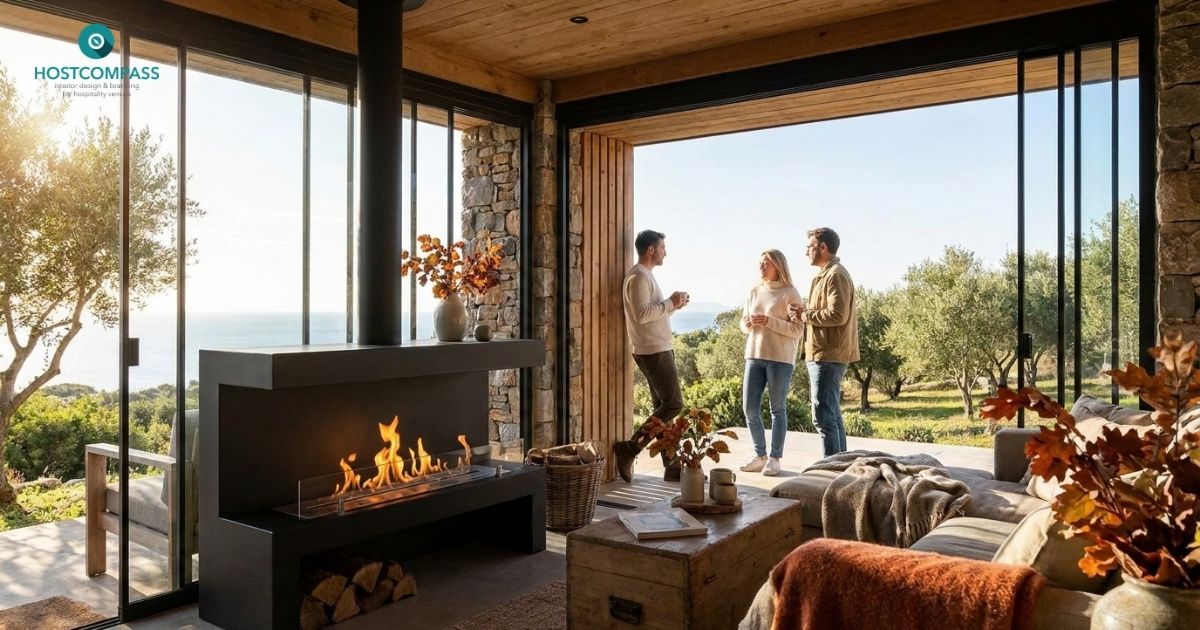
A summer property relies on its destination. For a winter venue, the interior becomes the protagonist — and helps attract bookings!
In summer, a property can rely on the landscape, the sea, the pool, the sunshine and the destination itself. Guests use the accommodation mainly for sleeping and showering, returning to the property between their outings. In winter, this relationship changes. Guests spend more hours indoors, the days are shorter, and they look for greater comfort, warmth and reasons to stay in.
This does not mean that a new renovation is necessary!
Often, what is needed is a seasonal adjustment of the guest experience: through lighting, materials, equipment and the way the spaces are used. The goal is not to make a property look “autumnal” with decorative objects. It is to make it winter-ready!
Here are 7 ways a summer property can continue to operate successfully as a winter rental, without renovation:
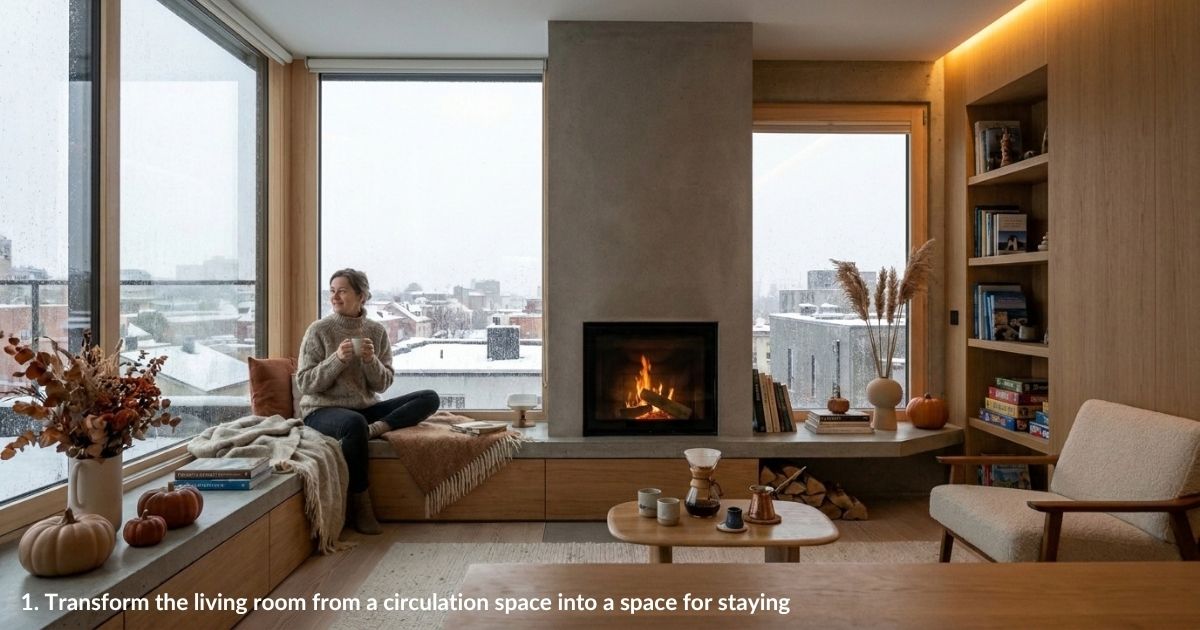
1. Transform the living room from a circulation space into a space for staying
The living room in a winter rental should be able to support longer periods of indoor living. The solution is not necessarily to buy a new sofa, but to create a complete living experience. The change is not simply about adding objects, but about creating reasons to use the space in different ways: reading, working, watching a movie, having coffee, socializing and relaxing.
Introduce a winter rug that defines the area and adds warmth and visual comfort. Create a cozy corner with a large, high-quality throw and cushions in different textures to make the sofa more inviting. Add small occasional tables or side furniture next to the seating, allowing guests to place a book, coffee or drink within easy reach.
Even more important is to have lighting at human level: a table or floor lamp next to the sofa can transform the atmosphere far more effectively than another decorative object.
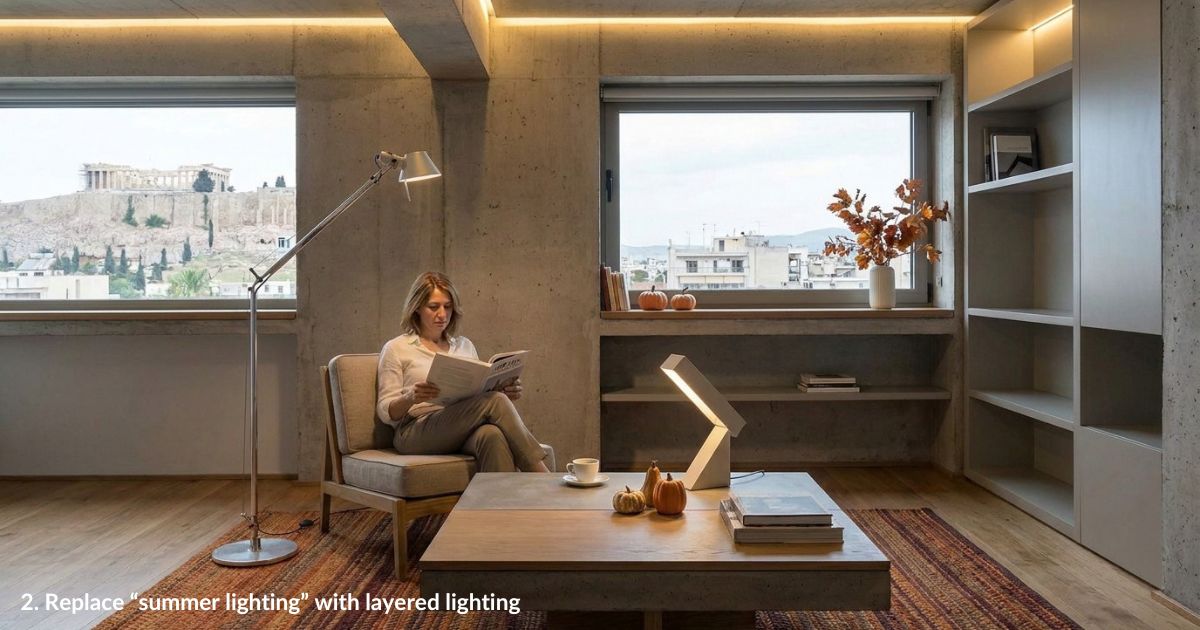
2. Replace “summer lighting” with layered lighting.
Lighting is perhaps one of the most underestimated seasonal changes. The solution is layered lighting: lighting at different levels, rather than relying on one strong fixture for the entire space. A property that works well in summer with a single ceiling light, supported by strong natural daylight, can feel cold and empty when guests spend more time indoors in the afternoon and evening.
Introduce a floor lamp or table lamp in the living room, while ensuring that the bedroom has dedicated reading lights beside the bed. In the kitchen, provide more functional light over the worktop, while in the bathroom introduce a softer, more atmospheric layer of lighting wherever possible to create a more wellness-oriented atmosphere.
The color temperature of the light should also be considered. For relaxation areas, warm light around 2700K–3000K creates a much more intimate feeling than cool white light.
The goal is not to make the space dark, but layered and atmospheric, with lighting that responds to different moments throughout the day.
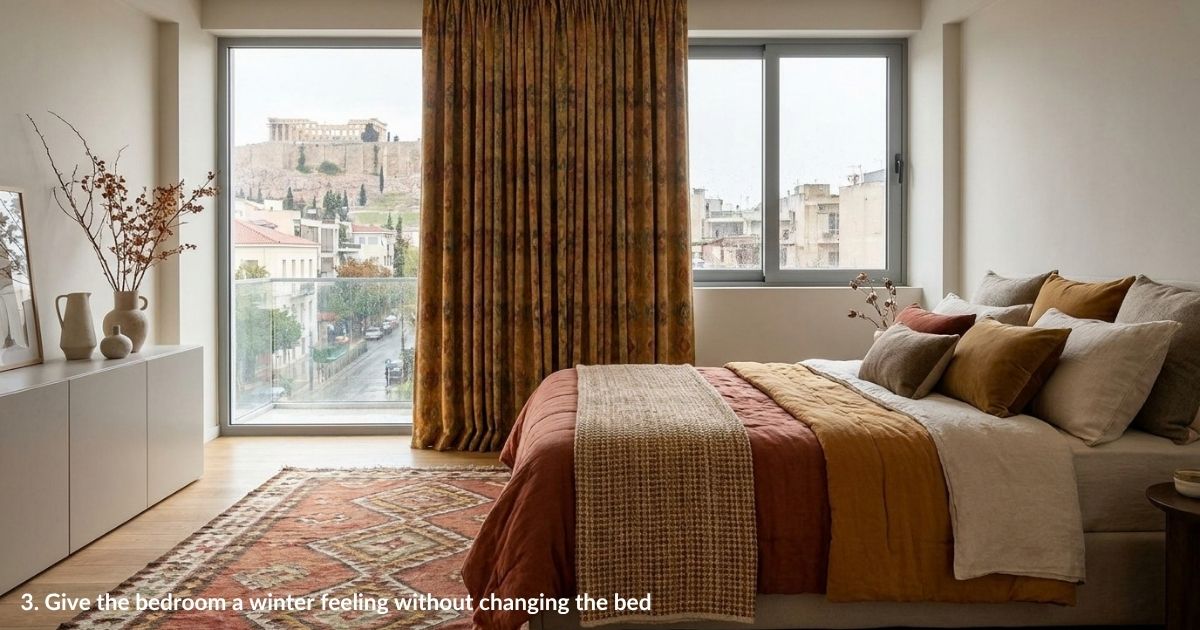
3. Give the bedroom a winter feeling without changing the bed
The bedroom in a winter rental is where the feeling of comfort becomes most immediately perceptible. You do not need to change the furniture. Instead, invest in textiles and lighting to create a dreamlike atmosphere, transforming the bedroom from a place for sleeping into a space where guests can read, relax and spend more time.
Replace the lightweight summer bedspread with a richer duvet or quilt and add a large throw at the foot of the bed, used almost like a runner, together with cushions in different textures. Curtains can also play a leading role: introducing a heavier patterned fabric can provide privacy while adding a distinctly winter character.
Bedside lighting is equally important. In winter, guests spend more time in bed, so a reading light on each side of the bed is far more useful than relying on a single central ceiling fixture.
Even the color palette can be subtly shifted from very bright summer tones towards warmer, earthy or deeper shades, without changing the overall design, through paint or wallpaper.
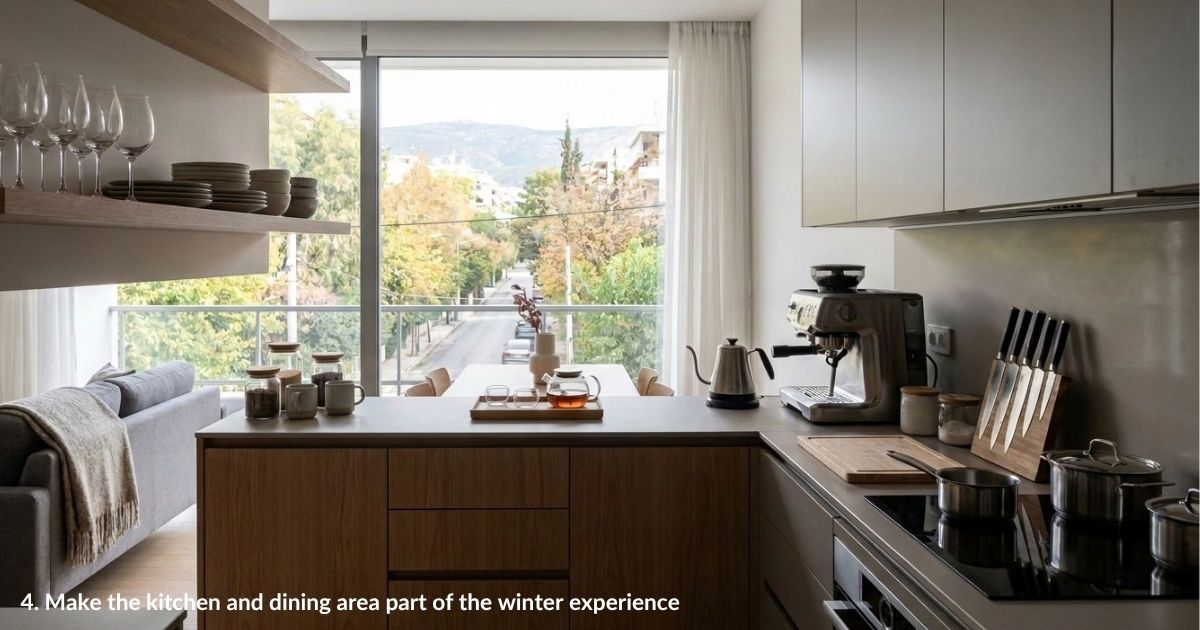
4. Make the kitchen and dining area part of the winter experience
Guest behavior also changes in winter. When outdoor options are reduced because the weather does not always allow guests to go out, the ability to comfortably eat or have a drink inside the property becomes more valuable. A complete kitchen renovation is not necessary. What is needed is to make sure that it is genuinely well equipped.
A good coffee station, wine glasses, proper tableware, a small serving tray, a kettle or coffee machine and adequate cooking equipment can make a significant difference.
The same applies to the possibility of preparing a meal or dinner. A table that functions simply as a quick eating surface in summer can become a place for breakfast, dinner, working on a laptop or playing a board game in winter.
The design should answer one simple question: If it is raining outside, could I spend an enjoyable evening here?
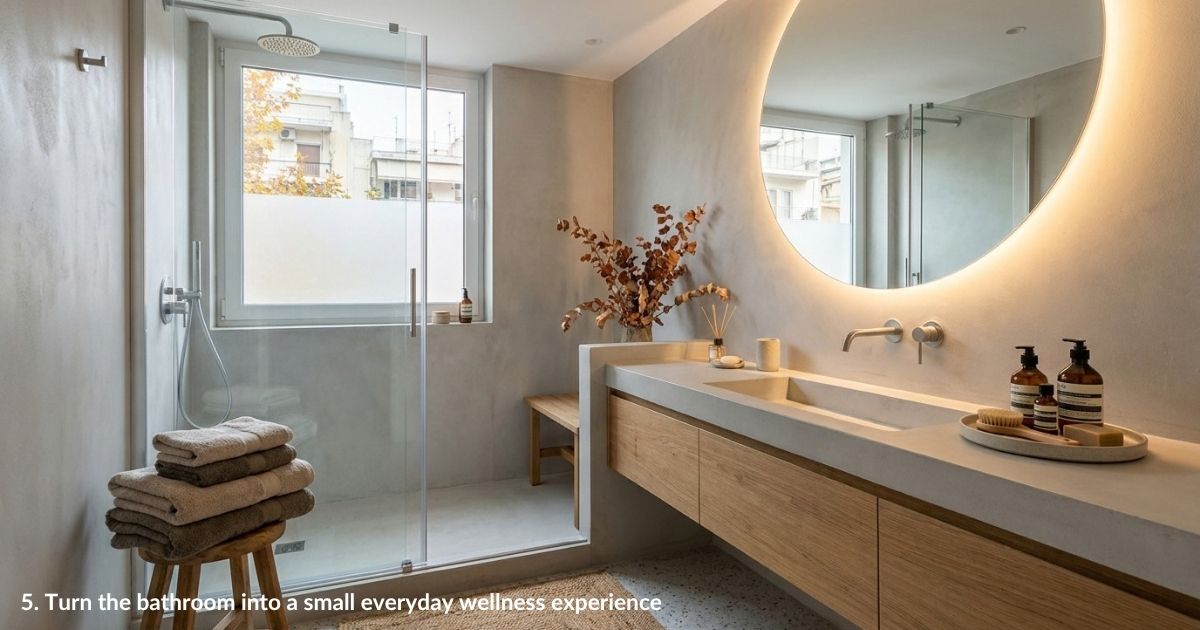
5. Turn the bathroom into a small everyday wellness experience
You do not need to create a spa. You do, however, need to make the existing bathroom feel more comfortable and complete.
High-quality and sufficient towels, a good bath mat, more carefully considered mirror lighting and a small but well-organized amenity set can change the experience. If possible, add a small stool or bench, wooden or ceramic elements and tactile materials to engage the sense of touch.
The important thing is to avoid the “hotel bathroom look” based solely on cleanliness and functionality. In winter, guests appreciate comfort and a sense of personal care even more, transforming the bathroom into a small daily ritual.
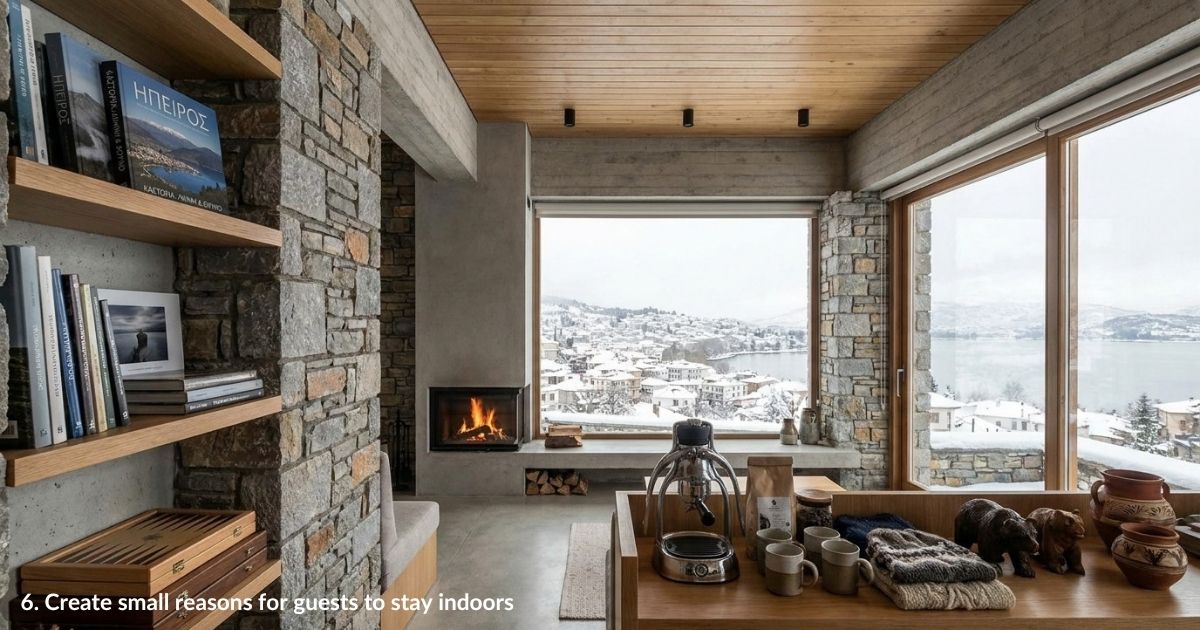
6. Create small reasons for guests to stay indoors.
The biggest change is not a piece of furniture, but the creation of a series of small slow moments — small areas within the space that encourage guests to use them at a slower, more relaxed pace.
Add a curated selection of books or photographic publications about the local area, board games, a small coffee corner with handmade local souvenirs or keepsakes. Create a well-designed workspace or a comfortable spot where guests can sit with their laptop, while allowing soft background music to contribute to the atmosphere.
There is no need to include all of these elements in every property. The important thing is to select those that suit the specific guest profile and character of the property.
The goal is to create micro-experiences within the accommodation itself. If guests have only a bed and a television, the property functions mainly as a base from which to go out. If they have options, comfort and atmosphere, the accommodation itself can become part of the journey.
In conclusion… from summer accommodation to winter experience.
The transition from summer use to a winter rental does not necessarily require changing furniture, installing a new kitchen or undertaking a renovation.
That is why successful seasonal adaptation is not about adding more decorative objects. It is about lighting, textures, equipment, comfort and carefully designed uses.
Ultimately, what transforms a summer property into a winter rental is not renovation.
It is creating more reasons for guests to stay.


