


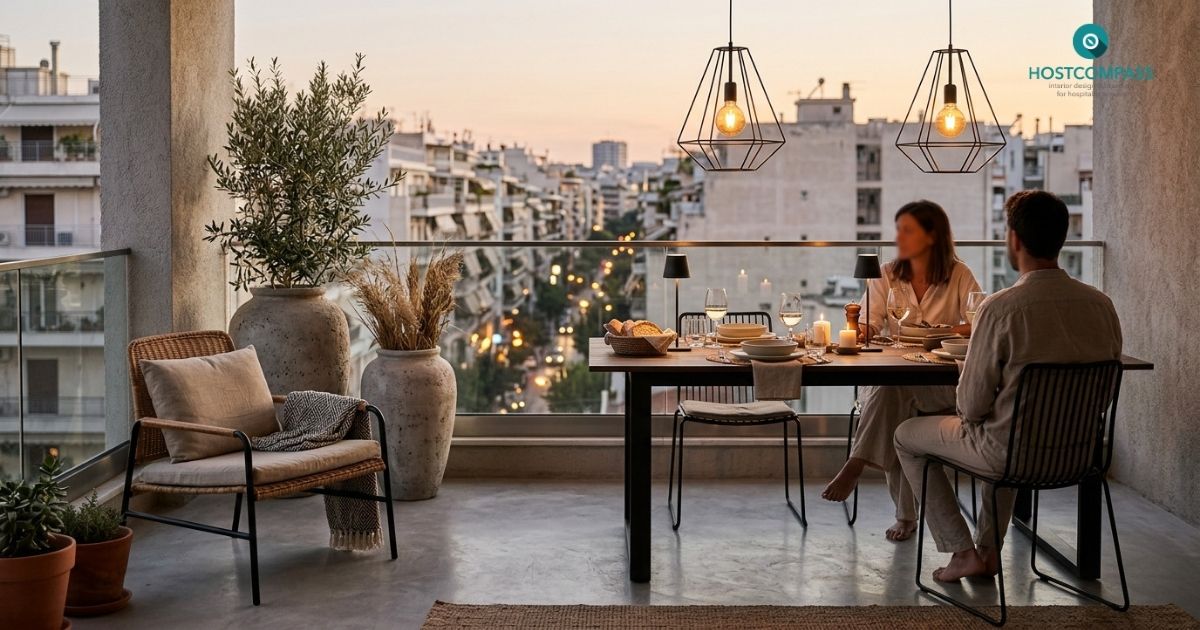
In short-term rentals, villas, and hospitality properties, outdoor lighting is much more than a functional necessity. It is a powerful tool for creating memorable guest experiences, enhancing atmosphere, and strengthening your property's marketing appeal.
A beautifully illuminated outdoor space can increase the perceived value of a property, create stunning photographs, and contribute to better guest reviews.
Why Is Lighting So Important?
Guests are not simply booking a room. They are booking an experience.
When outdoor areas are left in darkness or are overlit with cold white light, they lose their warmth, character, and charm.
On the other hand, a carefully designed lighting scheme creates a sense of luxury, enhances feelings of safety, encourages guests to enjoy outdoor spaces for longer periods, and elevates the property's photography and visual appeal.
1. Balcony Lighting: Creating an Inviting Outdoor Living Area
Even the smallest balcony can become a guest's favorite spot.
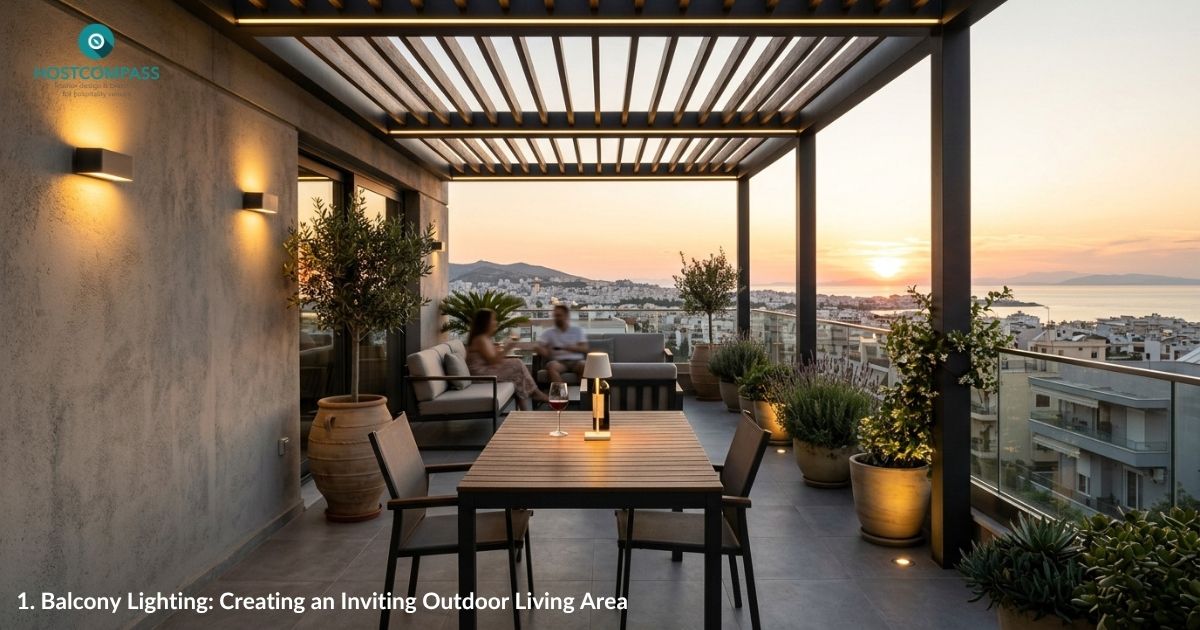
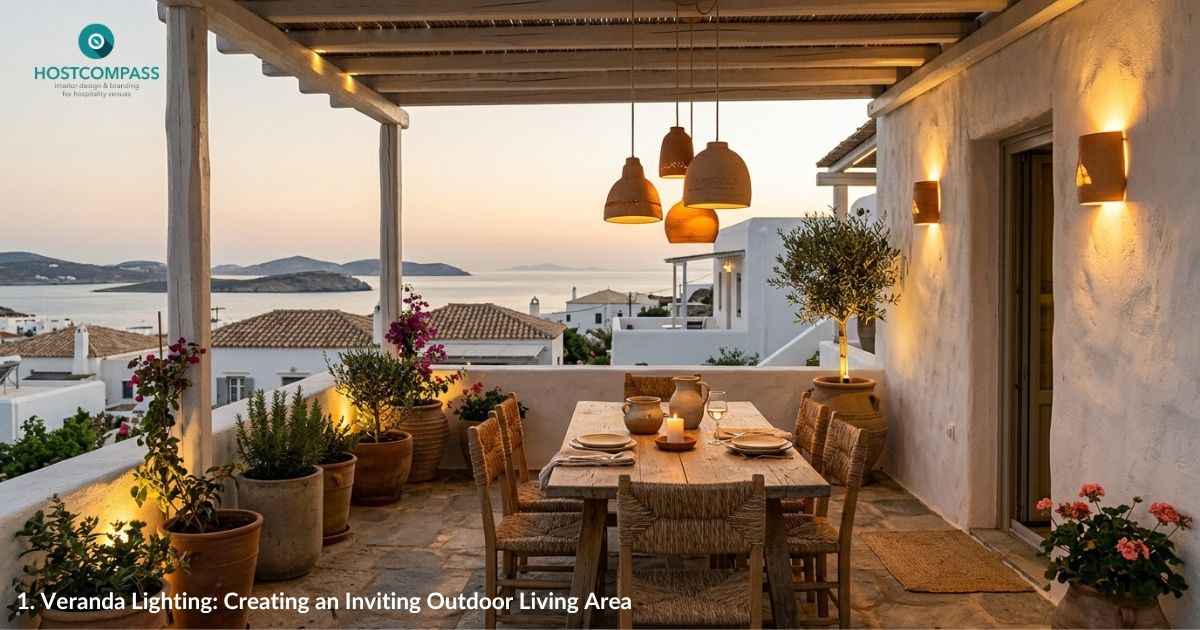
We incorporate wall-mounted fixtures with warm light temperatures (2700K–3000K), combined with decorative string lights installed on pergolas. Atmosphere is enhanced around outdoor dining areas with portable rechargeable table lamps and accent lighting that highlights plants and decorative planters.
We avoid excessively bright lighting that resembles street illumination, cold white lighting that creates a corporate or office-like feeling, and relying on a single central ceiling fixture.
2. Garden Lighting: Highlight Nature and Architecture
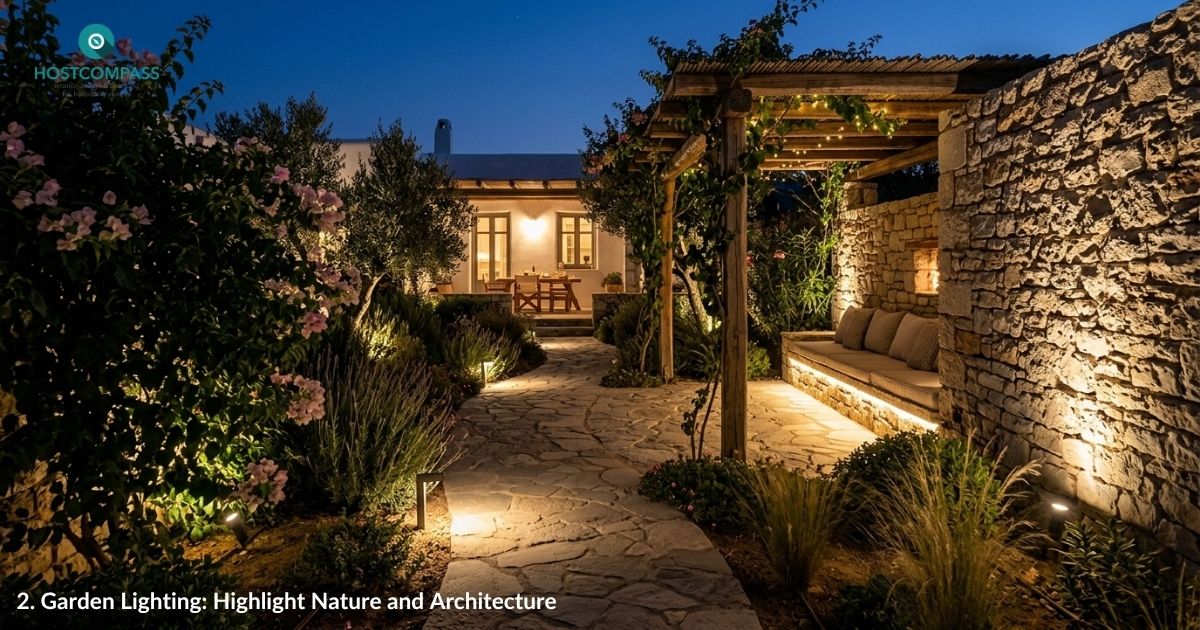
A garden does not need to be illuminated entirely. The most successful outdoor environments rely on the interplay of light and shadow.
Ideal solutions include concealed lighting beneath planting beds and ground fixtures installed along pathways and circulation routes. One particularly effective garden lighting strategy is highlighting the materials used in boundary walls, benches, pergolas, and architectural features, emphasizing the textures and materiality of the design while creating a welcoming atmosphere.
This approach adds depth, ambiance, and a luxurious resort-like feeling. At the same time, it creates carefully staged settings where guests naturally want to take photographs and share them on social media.
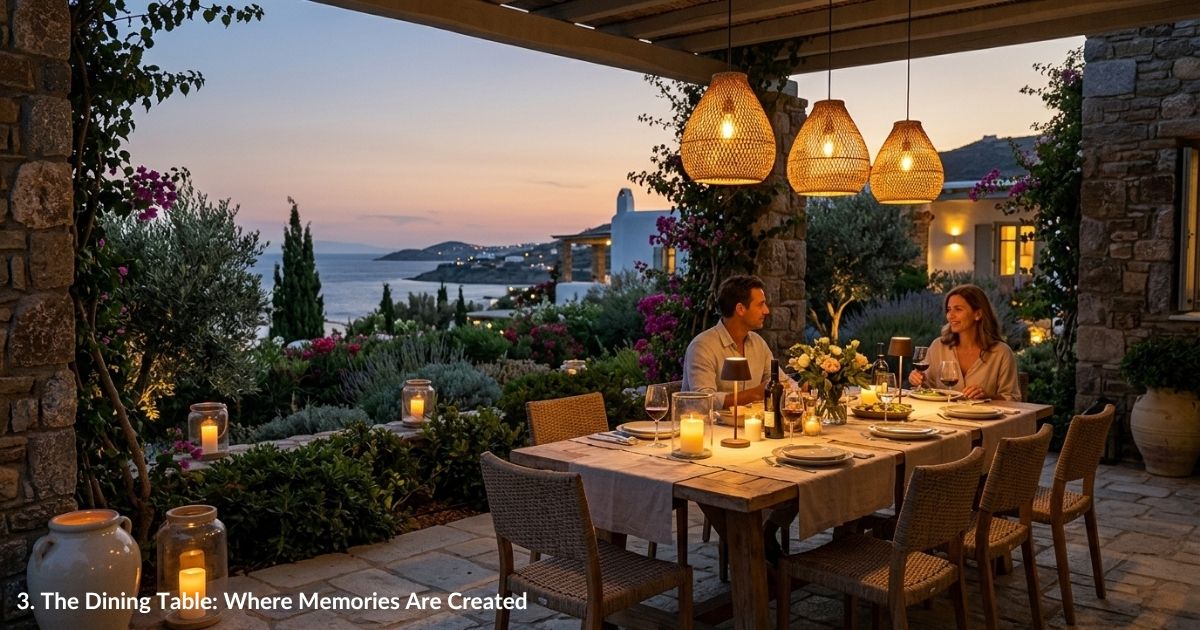
3. The Dining Table: Where Memories Are Created
Lighting around dining areas should be sufficient for guests to comfortably enjoy their meals without sacrificing the atmosphere.
The best solutions include pendant lights positioned above the dining table, selected according to the property's design style, lanterns with LED candles for extended use on dining tables or inside oversized floor vases, and rechargeable portable table lamps.
The ideal feeling is that of a refined outdoor restaurant, where lighting complements the setting without dominating it.
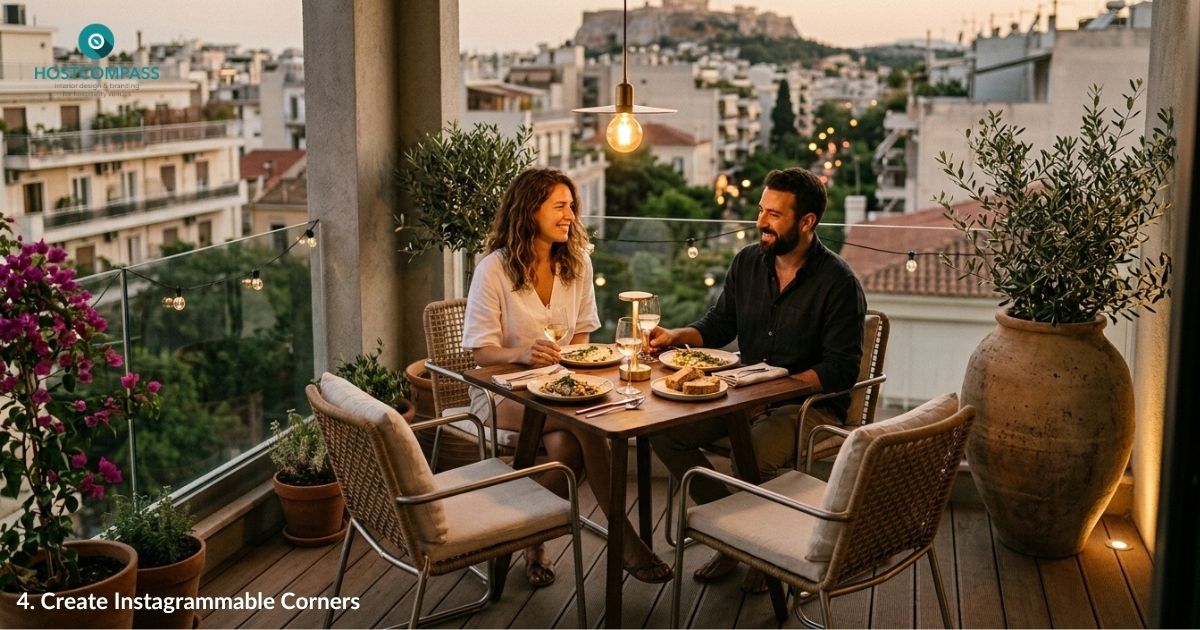
4. Create Instagrammable Corners
Today, many guests choose accommodation based on photographs.
A beautifully illuminated lounge area, a hammock with concealed lighting, or a dining table beneath linear lighting fixtures can become the most photographed spot on the property.
These images function as free advertising, as guests frequently share them on social media. We always prioritize warm lighting, as it enhances natural materials such as wood, stone, and planting, making them appear more welcoming and luxurious. Combined with carefully selected outdoor furniture and statement decorative pieces, lighting becomes an essential element of the overall design experience.
In Summary...
Lighting is not an additional feature—it is an integral part of the Hospitality Experience.
Effective lighting should never be considered a final decorative touch added at the end of a project. Instead, it is a strategic design tool that showcases outdoor spaces, elevates the guest experience, and ultimately encourages potential guests to click the booking button.

Evangelia Papadimitriou


