


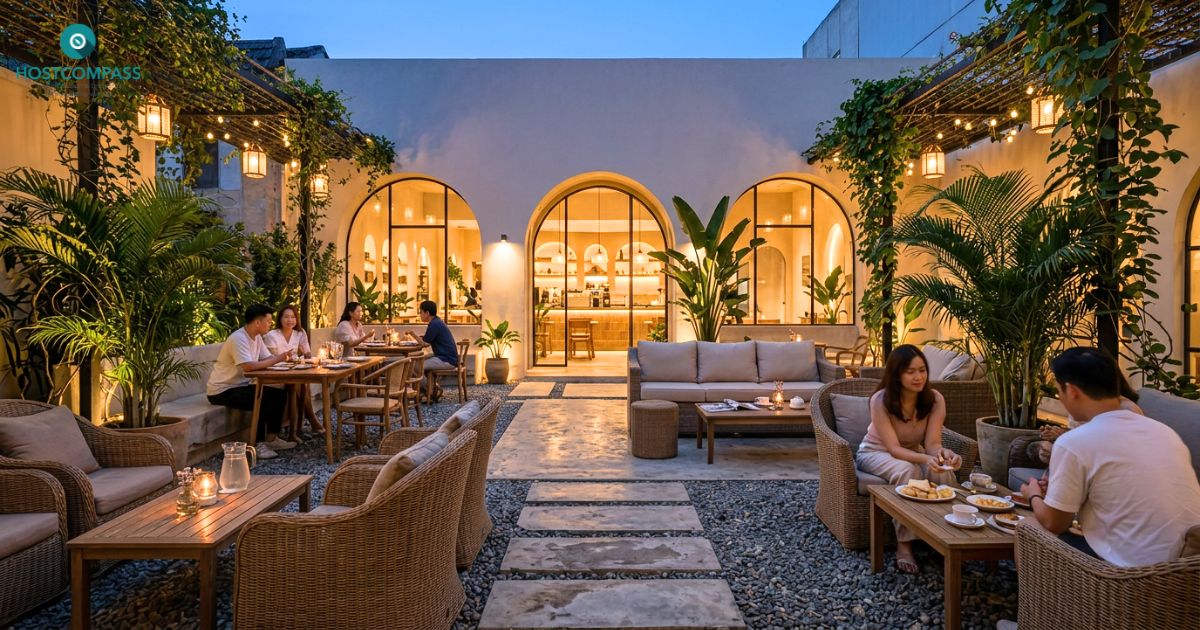
An outdoor lounge area in a hospitality property is not “just a beautiful courtyard.”
It is a space that can increase guest stay duration, boost the consumption of drinks, coffee, and breakfast, and most importantly… encourage more social media photos.
But there is one critical mistake happening everywhere: These spaces are designed as secondary areas, like residential spaces, instead of performance-driven hospitality environments.
So how do we create an outdoor lounge area that generates revenue?
Here are 5 key points to apply!
1. Start with flow, not furniture
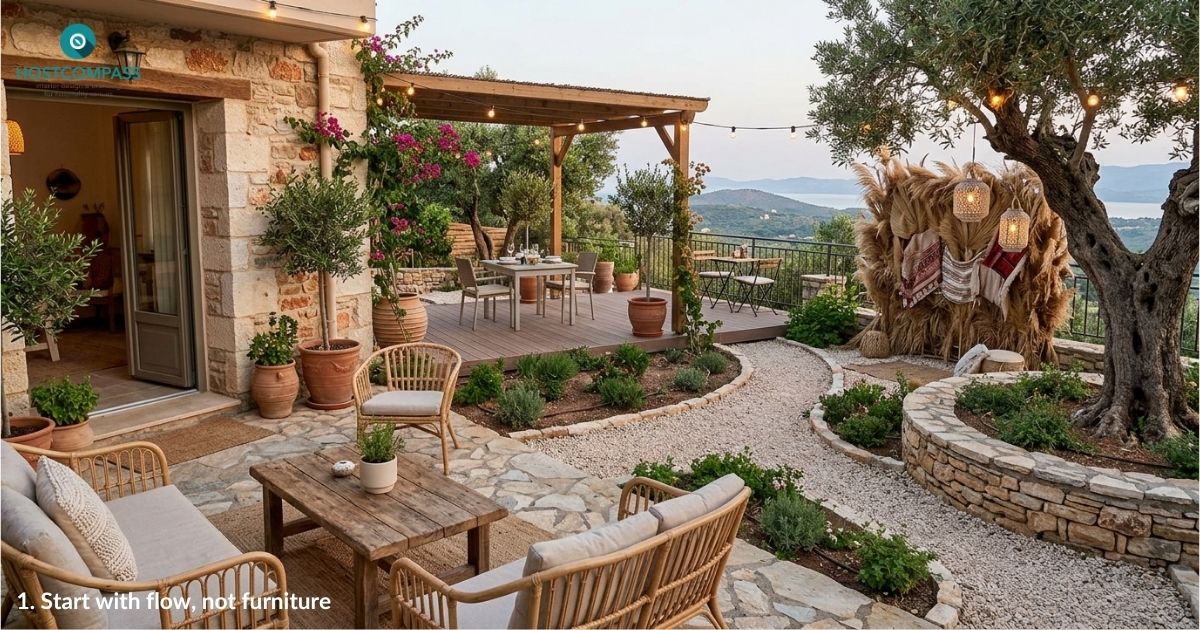
The first mistake in most short-term rentals and small hotels is that outdoor lounge areas are designed with “whatever fits, wherever it fits.” The right approach is not to begin with furniture, but with the flow of the space.
• Where does the guest move from the room to the outdoor area?
• Where is breakfast or drinks served?
• Where do 2 guests sit versus 4 guests?
The practical method we apply is dividing the outdoor lounge into 3 small usage zones:
1. A relaxation zone with lounge seating,
2. A consumption zone with tables for coffee or breakfast, and
3. A photography/experience zone by integrating an “Instagram spot.”
Without this categorization in the structure or operational logic of the lounge area, the space does not perform — it simply “exists,” while risking becoming a collection of unnecessary furniture.
2. Furniture should work, not just look beautiful
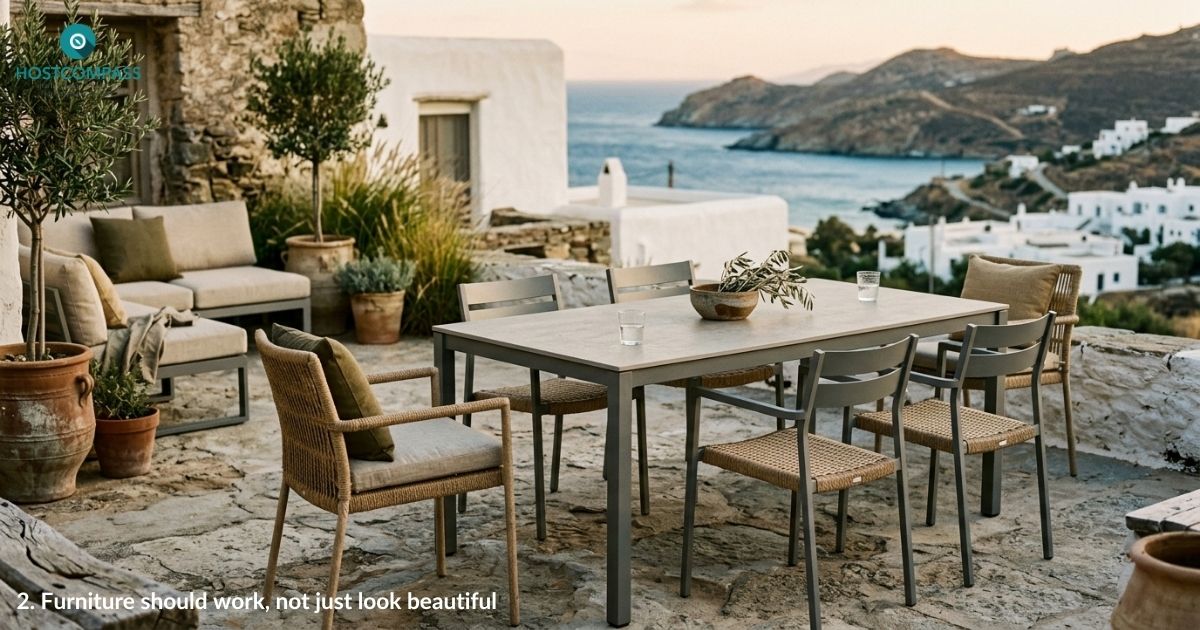
In hospitality projects, we do not select furniture as if we were furnishing our own home.
Furniture made from materials resistant to sun exposure, salt, and humidity is needed, while also ensuring easy daily cleaning and flexibility in movement and layout.
Choose specific solutions that truly “do the job,” such as powder-coated aluminum instead of wood that deteriorates quickly, cushions with outdoor quick-dry fabrics, and dining tables with ceramic or compact surfaces in order to combine aesthetics with lower maintenance requirements.
3. Lighting is what “sells” the space at night
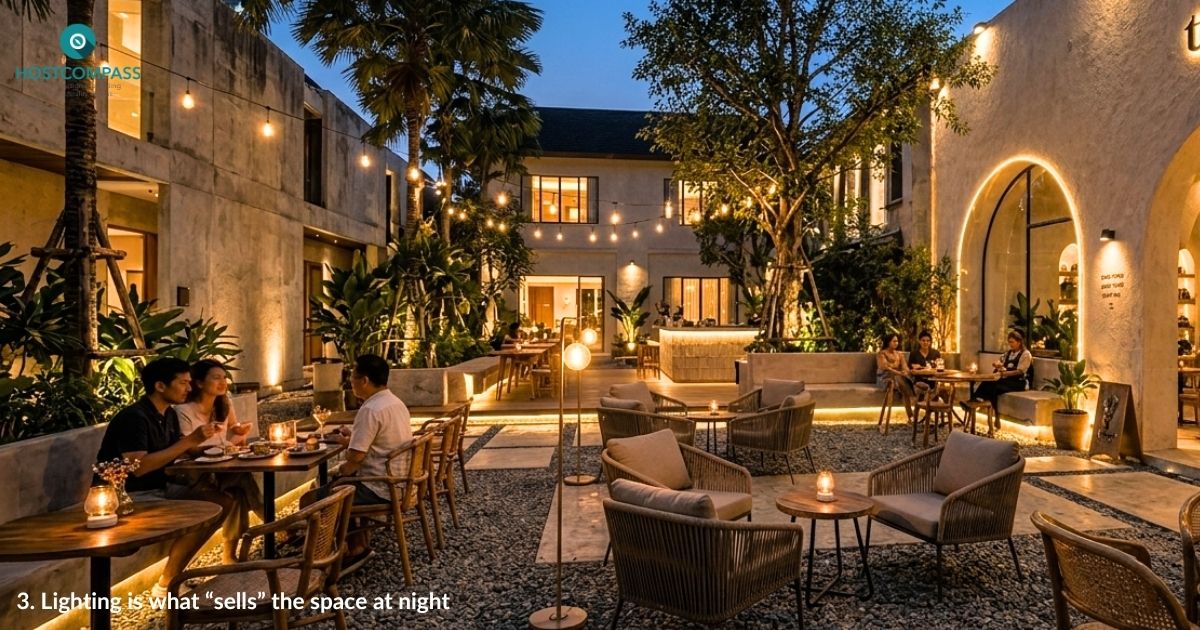
70% of the hospitality experience after sunset is lighting. One of the most common mistakes is relying on a single general light source without lighting layering, which completely destroys the atmosphere.
The right solution includes low warm lighting (2700K–3000K) and layered lighting design.
Apply general ambient lighting combined with accent lighting that highlights architectural details, walls, and plants.
Create atmosphere and enhance faces and food presentation through table lamps, while ensuring circulation with linear LED lighting and recessed floor spots.
You should also not overlook lanterns, candles, and decorative lighting that encourage even more photographic moments.
4. Outdoor spaces must photograph well and help sell services
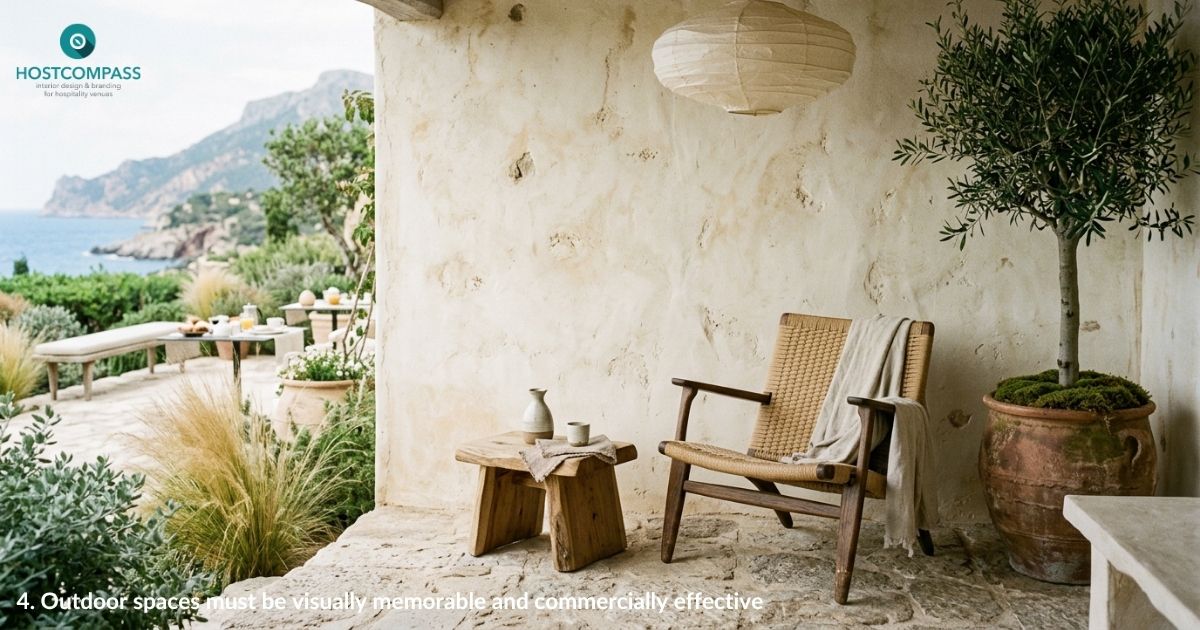
Today, an outdoor lounge area does not work only for the guest. It works for Instagram as well. To create the perfect setting, we need a “hero corner.”
This means a spot with a beautiful background (such as a wall, material, or color), combined with a recognizable statement element (for example a designer chair, lighting fixture, or mirror), all arranged in a clean composition without visual clutter.
A well-designed outdoor lounge should never be treated as an unnecessary expense. It is a sales tool. A terrace where breakfast can be served increases the perceived value of the room, a cocktail corner encourages consumption, while smaller tables improve the occupancy and functionality of the outdoor area.
5. Shading is business, not just design aesthetics
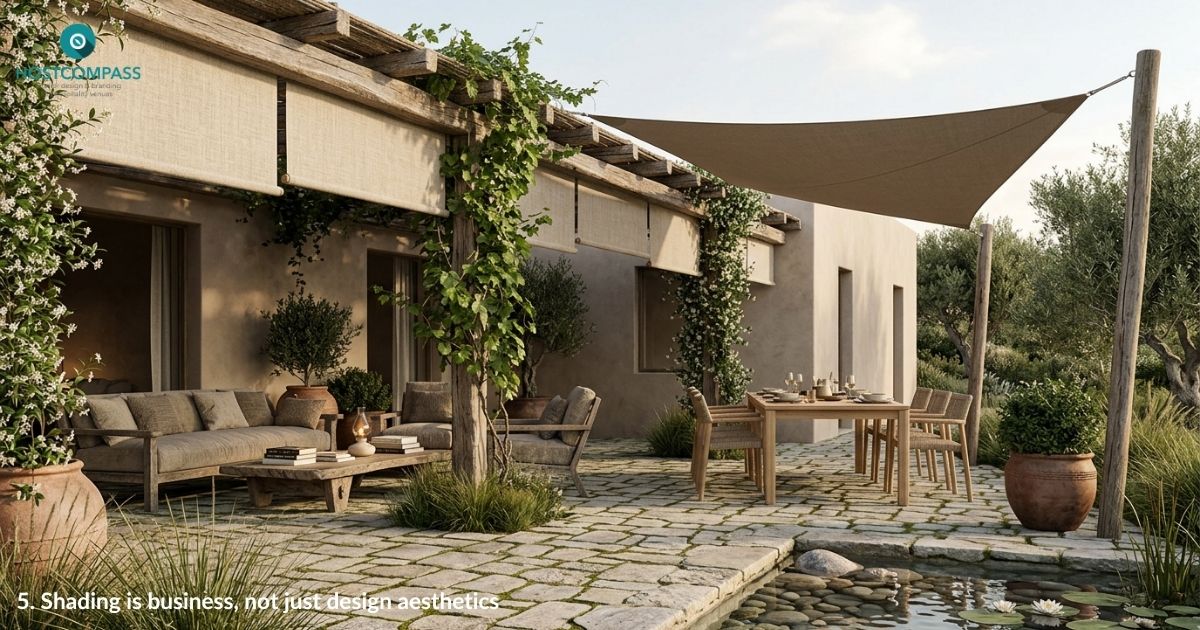
Without proper shading, a space loses up to 50% of its usability. By applying solutions that truly work — such as pergolas with movable elements, large shade sails, and natural shading through planting instead of heavy structures — we manage to extend the hours of use.
Our goal is to create cool and comfortable environments that can function throughout the entire day: in the morning for breakfast, coffee, and sunbathing, at midday for relaxation and reading, and in the evening for dining, social gatherings, and a more refined “bar experience.”
In conclusion…
An outdoor lounge area in hospitality is not simply “decor.” It is a tool for revenue, guest experience, and brand image. When designed correctly, it can increase average guest spending, improve reviews, and even become the strongest feature of the property itself.

Evangelia Papadimitriou


