


Hospitality accommodation market is going through a period of substantial transition. The demands of guests and our everyday lives are pressing hospitality at a faster pace than in previous years. So, how do small accommodations stand against this reality?
As wars are ongoing in our neighborhood, inflation is putting pressure on the average budget in our country and in the global village, and new travel habits are leading to an increased need for meaningful, quality experiences, the criteria for choosing an accommodation are… being redefined.
These changes do not concern exclusively the aesthetic upgrade of our space, but the way in which we design, construct, renovate and invest money, so that every investment, small or large, is perceived by our customers and essentially upgrades our business against the competition.
Hospitality space design is now a key factor in this process, as it connects functionality, guest experience and the commercial value of the property.
1. Functional mini-kitchen returns
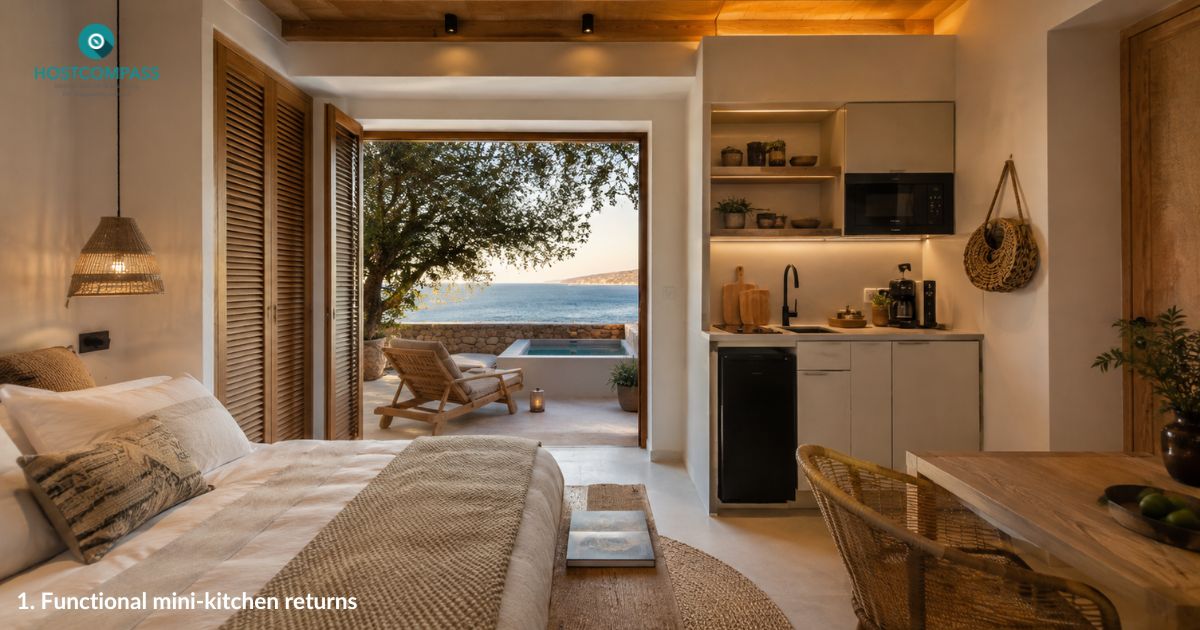
The significant increase in the cost of dining has brought the functional kitchen back to the center of guests’ needs. While in previous years many small apartments were limited to a basic coffee corner, today there is an increasing demand for fully equipped kitchenettes, even in small-sized accommodations.
The modern traveler wants to have the possibility to prepare breakfast, a light meal or dinner, not only for financial reasons but also for greater flexibility during their stay. The presence of an induction hob, microwave oven or compact oven, quality coffee machine, functional storage spaces and properly organized kitchenware is now a competitive advantage.
Investing in a well-designed compact kitchen significantly increases the perceived functionality of the accommodation and makes it attractive to couples, older people and families with children, expanding the audience it can address.
2. Room & Bathroom are hospitality experiences... not just spaces
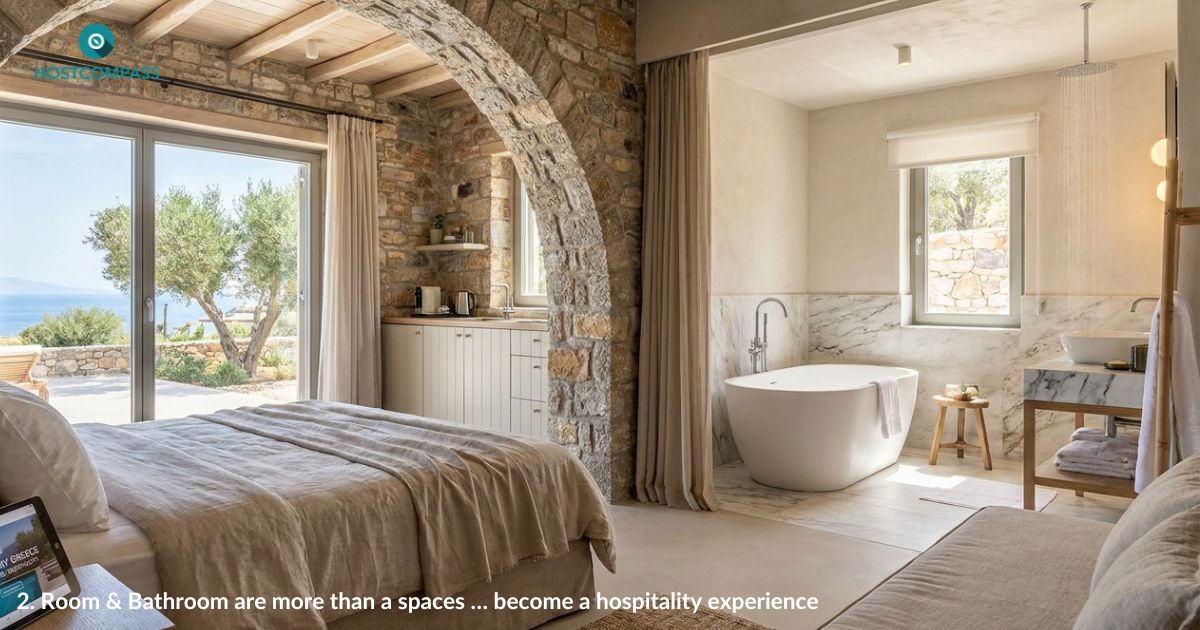
The two most important evaluation points of a small accommodation have always been the bedroom and the bathroom. At the same time, in tourist accommodation design, these two spaces are now a key part of the overall experience.
The guest is no longer simply looking for a clean and aesthetically pleasing space; they are looking for an experience that will create a feeling of rest, comfort and personal care.
We have moved from beautiful decoration… to experience design.
The quality of the mattress, atmospheric lighting, natural materials, high-quality bed linen, large mirrors, walk-in showers and properly designed storage spaces directly affect both the guest experience and the reviews they will leave after their stay.
In many cases, these two spaces are the ones that determine the final booking decision, as they are the places where the guest imagines themselves resting and enjoying their personal time.
This becomes even more important in short-term rental design and Airbnb design, where the image of the space before booking directly influences the guest’s decision.
3. Outdoor space is upgraded into a key commercial advantage
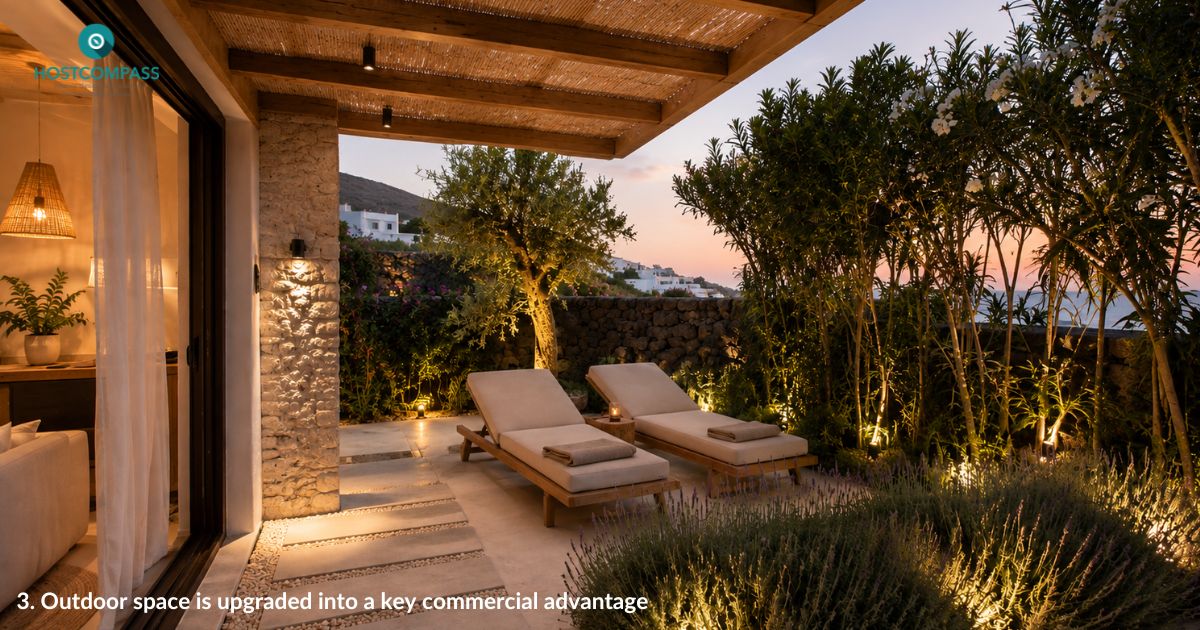
The value of outdoor space has increased significantly, regardless of the overall size of the property. A properly designed terrace, a functional balcony, a small courtyard or a garden with seating can decisively influence the competitiveness of an accommodation on booking platforms.
Guests now seek to spend more time in outdoor spaces, whether to enjoy their breakfast, work remotely, or simply relax. There are many cases of accommodations with limited interior space that benefit significantly from the USP (= Unique Selling Point) they offer, namely the terrace they have, securing long-term bookings.
For this reason, elements such as shading, quality outdoor lighting, comfortable furniture, planting, outdoor dining areas, and even a small outdoor kitchen or BBQ can add significant value to the property. The outdoor space is no longer a complementary feature, but a key element of differentiation.
This is particularly relevant to villa design, where the outdoor space is often a key part of the overall guest experience.
4. The accommodation venue evolves into the destination itself
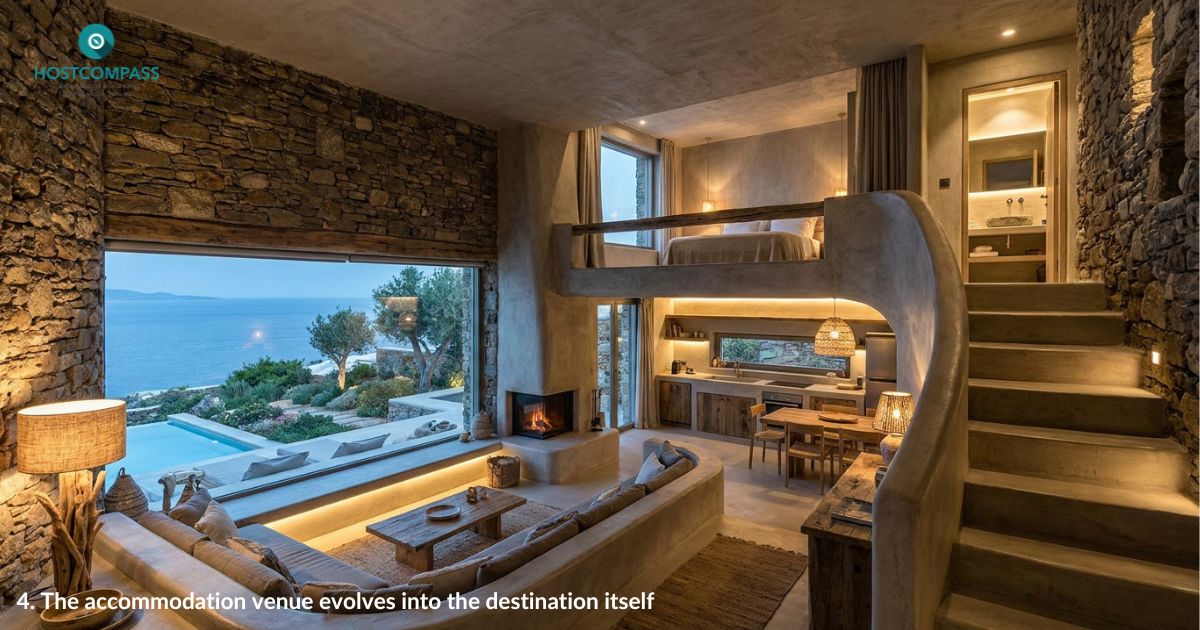
The most substantial change concerns the shift in perception around hospitality. The modern visitor travels seeking relief from the intensity of everyday life and expects the accommodation to actively contribute to their mental and physical wellbeing.
As a result, the accommodation ceases to be simply a place to stay and becomes an integral part of the overall travel experience. The design must now create conditions of calm, privacy and relaxation through lighting, textures, natural materials, connection with the outdoor space and the overall atmosphere of the environment. A successful accommodation does not only offer hospitality; it offers a way of life for as long as the stay lasts.
This is also the reason why tourist accommodation renovation can no longer be limited to a simple aesthetic refresh. Design, functionality and guest experience must be part of the same strategy.
The same applies to hotel renovation, where every intervention in the space must respond to the needs of the modern guest and strengthen the overall competitiveness of the business.
In the case of investment property renovation, the proper use of the budget becomes even more important, as every design decision must create real added value for the property.
In Conclusion...
These developments reflect a broader change in the philosophy of small accommodation design. Functionality, experience, wellbeing and the creation of meaningful moments are becoming more important than superficial aesthetics or luxury equipment.
Investors who adapt early to these new requirements will gain a significant share of the market, as they will offer spaces that respond to the real needs of the modern traveler and create the conditions for higher ratings, increased bookings and greater guest loyalty.


