


We've all stayed in hotels, investment properties, or rental accommodations that have been renovated but feel cold and uninviting, or spaces that are superficially decorated without any functionality—just a lot of aesthetic noise!
Despite the owners' earnest efforts and financial investment, what went wrong, and why can't this investment translate into bookings and profits for the business? The answer is that essential steps in the upgrade process were skipped, or mistakes were made during the renovation process.
This led us to write a different kind of article about hotel and investment property renovations, putting things in the right order!
In this article, we will break down the stages of renovating a hotel, an investment property, or a short-term rental, and how we use the power of proper design and decoration to create an unforgettable hospitality experience for guests and vibrant spaces that evoke emotions, ultimately driving profits for the business.
The four main stages of property renovation are:
- The conception of the initial idea
- Analysis & Design
- Technical Work
- Interior Design & Decoration
1. The Conception of the Initial Design
We start with the concept phase. This is where the magic begins! It’s not just about drawings and sketches; it’s about envisioning the potential that the property or hotel holds. Initially, we conduct research on the competition, explore the opportunities the area offers, and identify the property's strengths, as well as determine the target customer base for the business. (Competitor analysis, market analysis, niche market)
We integrate the local heritage and environment of the area into the concept of inspiration—elements that reflect the identity of the region—thereby creating a sense of belonging for the guests. We draw inspiration from global travel trends and envision the hospitality culture we want to convey in the accommodation. Many investments skip this stage, resulting in the construction of identical apartments or buildings with no differentiation from their competitors.
2. Analysis and Design
In this phase, the previous aspirations are transformed into tangible plans that capture the essence of the property. We create a functional layout that maps out how the user moves through the spaces. How they enter the space, where they leave their luggage, who greets them at the reception, what they expect to find in their room, and so on.
We place the guests at the center of the design process, not our personal style! We anticipate their needs and preferences to create spaces that represent them, designing with a focus on flexibility and functionality. This results in a design guide that translates into spaces, dimensions, materials, and lighting during the design phase. Nothing is left to chance!
We pay attention to every detail from the start, applying harmony, scale, and geometry, ensuring that neither functionality nor aesthetics are compromised. The initial rough sketches or designs are refined into more sophisticated plans, while 3D visualization software or virtual simulations help us visualize the two-dimensional plans. This aids the construction teams in understanding our ideas and designs.
Spend more time on the initial study and trust professionals who specialize in commercial spaces. This will save you time and money when it comes to technical work, helping you avoid mistakes and setbacks.
3. The Technical Work
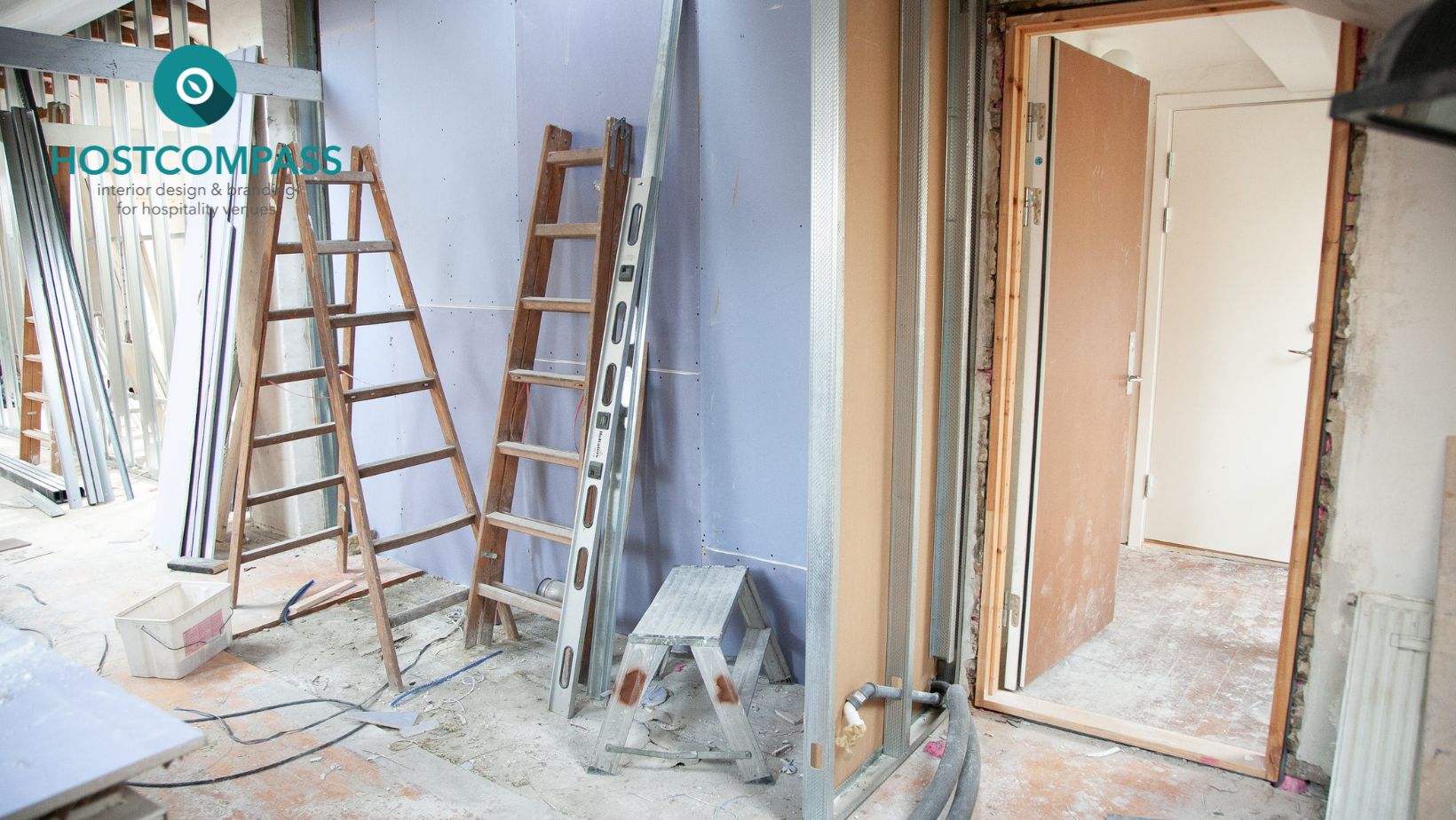
Moving on from the study phase, we enter the heart of the renovation—the execution of the technical work.This is where all the planned designs from the previous phase start to come to life. We are now at the gateway to creating unforgettable hospitality experiences.
During construction phase, ensure that all regulatory requirements, including safety codes, permits, and environmental standards, are met is essential to avoid legal complications, while quality control at every stage, from foundation to finishing, ensures the durability and aesthetics of the hotel or property.
Proper material sourcing and planning ensure both quality and sustainability, enhancing long-term operational efficiency, assuring that the project timeline and budget is met and avoiding delays and cost overruns.
4.Interior Design & Decoration
Choosing furniture is not just a matter of aesthetics; it’s about functionality and flow within the space. We carefully select the style, mix essential furniture with smaller secondary pieces and don’t forget comfort and flexibility. It is a decision of strategic importance, as these are large items, such as the bed, lounge chairs by the pool, and reception furniture, which dominate the space they occupy and need to be placed thoughtfully. The careful selection of decorative elements such as small furniture, artwork, lighting, fabrics, and accessories plays a crucial role in creating hospitality experiences.
Decorative elements should be treated like pieces of a puzzle. Each piece is significant on its own, but it also needs the others to form the complete picture.Thoughtfully chosen decorative elements evoke emotions, tell stories, and invite guests to observe the space and appreciate the aesthetics and hospitality provided by the accommodation.
In summary… As we conclude our journey through the complex world of renovating a business or property, remember that it’s not just about changing the appearance of a space, but about creating experiences. This is where businesses often make mistakes during their upgrade process! Keep in mind that from conception to the final transformation, every design choice and element of architecture and decor plays a vital role in shaping an exceptional space!

Evangelia Papadimitriou


