


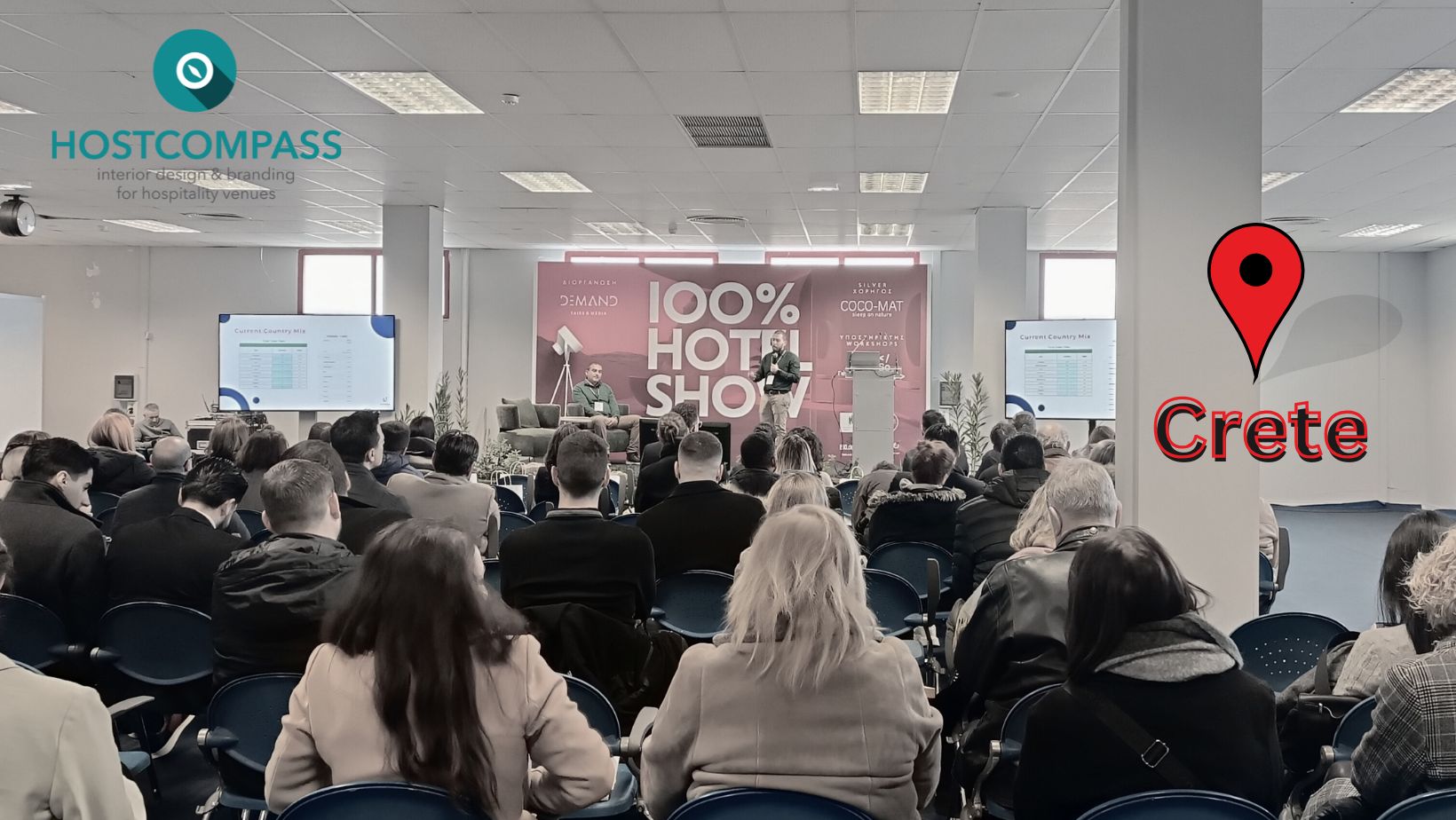
After the intense and creative experience of the 100% Hotel Show in Athens in November 2024, where we actively participated as an architectural firm HOSTCOMPASS, my visit to the “sister” exhibition in Heraklion, Crete, felt like a natural next step.
I wanted to gain a comprehensive understanding of how the exhibition is set up and adapted to the needs and particularities of the local hospitality market. Beyond my professional curiosity, I had another goal: to map the landscape of hoteliers and luxury villas on the island, exploring up close the trends, challenges, and innovations shaping Crete’s tourism product. Through meetings with exhibitors, presentations, and discussions, I gained valuable knowledge and inspiration that I believe is worth sharing.
The Highlights_What I Take Away:
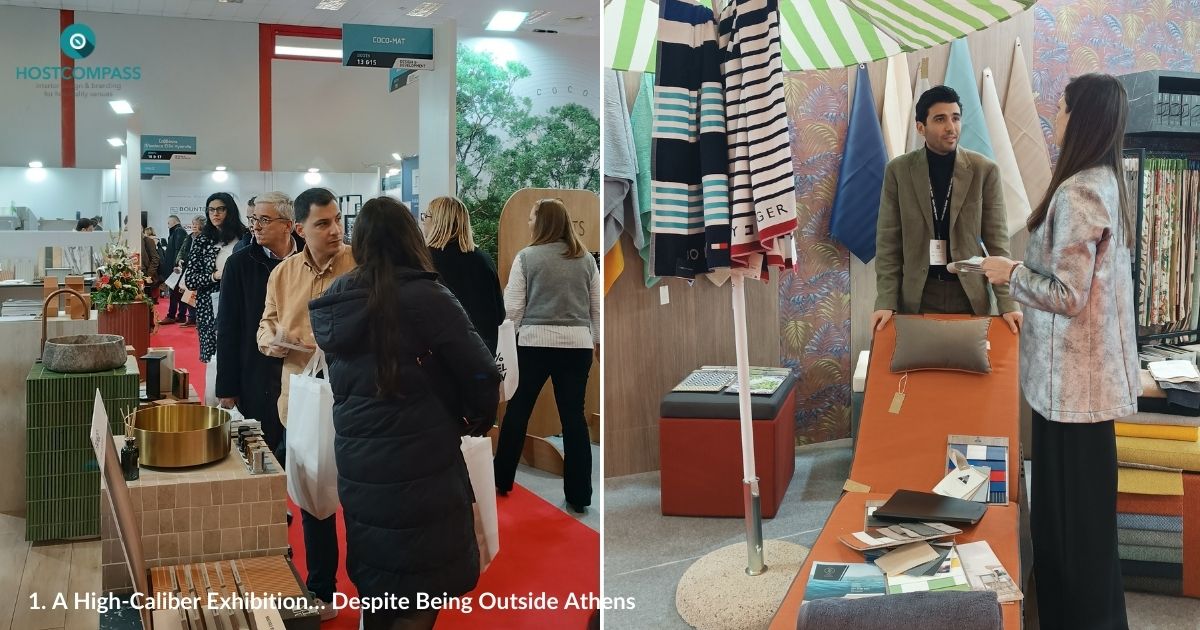
1. A High-Caliber Exhibition… Despite Being Outside Athens
One of my initial concerns was the overall quality of the exhibition. I wondered whether both the participating companies and the visitors would form a well-established, specialized audience or if the event would lean toward a more "fast-track" approach, focused mainly on local culture with limited representation of contemporary services and innovations.
To my delight, the level of the exhibitors and the quality of insights shared by the speakers were absolutely on par with the Athens edition! As for the visitors, they were targeted, forward-thinking professionals, eager to explore the market, conduct meaningful research, and seize the opportunities presented by the exhibitors.
What stood out even more was the presence of companies from Athens, which, despite the added logistics and transportation costs, recognized the value of connecting with the Cretan audience and establishing their presence in this dynamic market.
2. From Concept to… Construction!
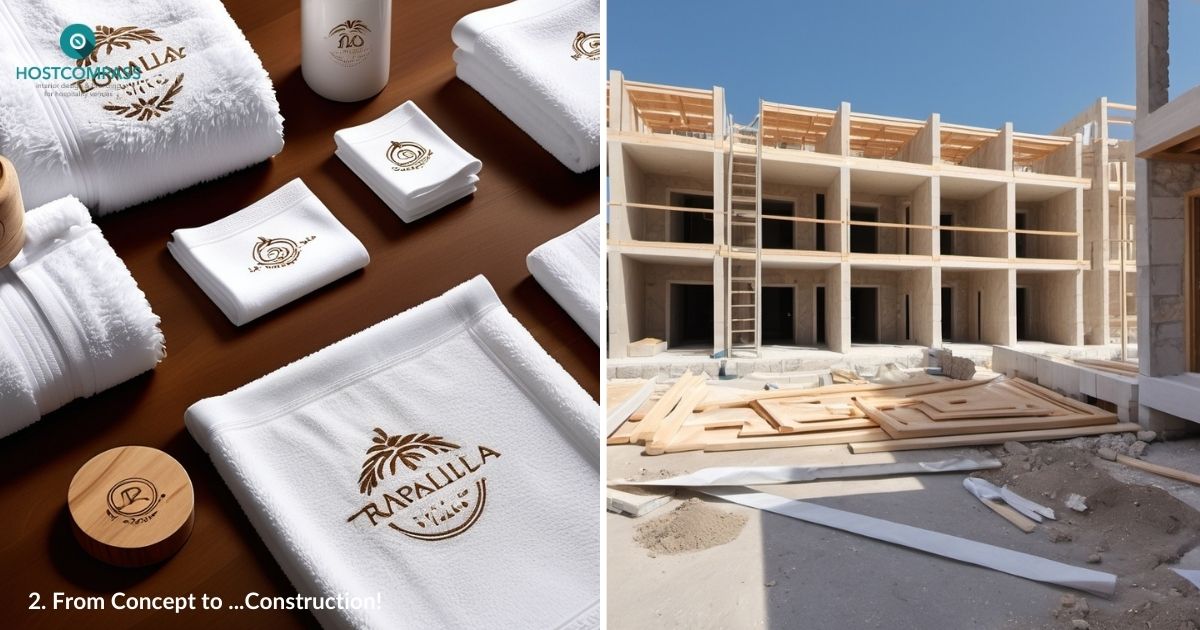
The exhibition showcased professionals from every phase of hotel development — from branding and concept research to renovation, furnishing, and operational management. This created an invaluable opportunity for visitors to connect with the right experts, no matter the stage of their hospitality project.
Despite the relatively compact size of the DEKK exhibition center, the diversity of exhibitors was impressive. The range of companies fully addressed the needs of hoteliers and luxury accommodation owners — from cleaning services, bespoke furniture, and architectural design to landscaping, construction, interior materials, textiles, innovative solutions, reservation systems, and property management. The exhibition truly offered a one-stop destination for high-quality partnerships and comprehensive solutions.
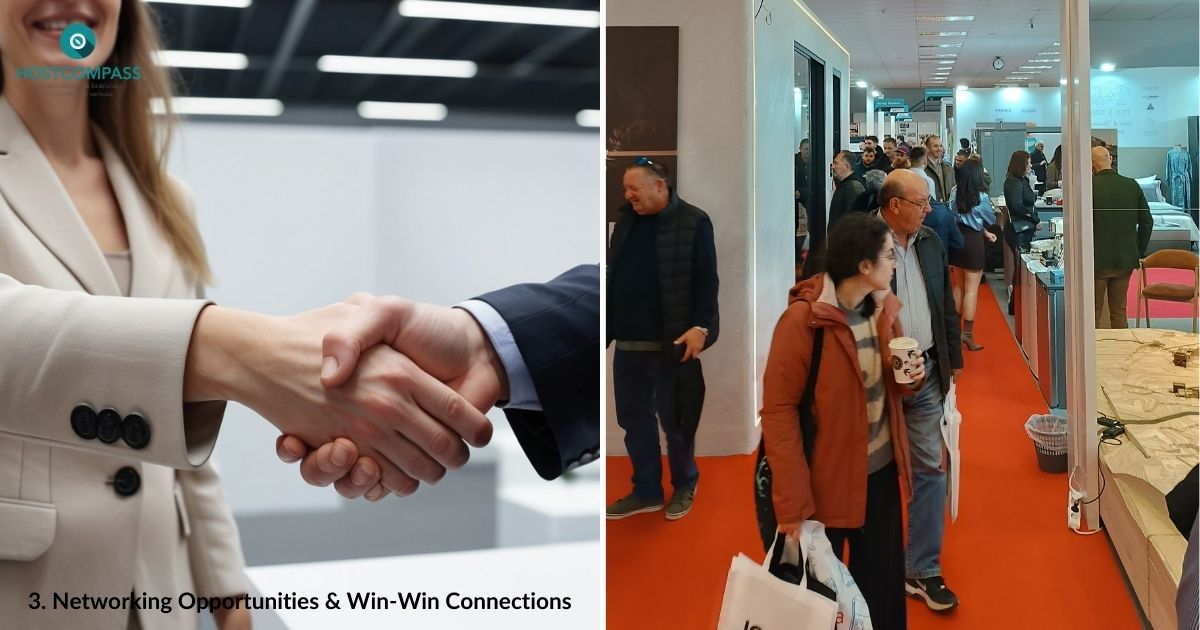
3. Networking Opportunities and Win-Win Connections
The compact size of the exhibition turned out to be a real advantage, allowing visitors to explore every booth without missing any, ensuring full exposure to the wealth of information and opportunities on offer. At the same time, exhibitors benefited from a consistent flow of engaged attendees, maximizing their visibility and outreach.
The lively conversations happening around the booths, at the café area, near the presentation spaces, and at the entrance created a dynamic networking atmosphere. These spontaneous meetups encouraged the exchange of business cards, fostered connections between exhibitors and potential clients, and paved the way for future collaborations.
Adding to the friendly and relaxed vibe was the live music, refreshing drinks served by the CubClub, and — of course — the warm and genuine hospitality that Crete is so well known for.
Areas for Improvement _ What I Would Change:
Every event, no matter how successful, has room for enhancement. Certain adjustments could elevate the experience for both exhibitors and visitors even further. With that in mind, here are some drawbacks I noticed that I believe should be considered for future editions.
1. The Layout of the DEKK Exhibition Space
The two available halls were packed with exhibition booths — nearly double the number from last year’s event — creating a sense of "compression." While the standardized, ready-made booth structures helped maintain an organized layout, they limited the overall feeling of spaciousness.
Given the strong response from companies and the positive atmosphere, I believe that a larger venue will soon be necessary. Expanding the space would accommodate more exhibitors and significantly enhance the visitor experience.
2. Location and Transportation
The exhibition center’s location, quite far from Heraklion and the city’s wider center, combined with the lack of sufficient transportation options, made commuting challenging. Additionally, the two-day duration of the exhibition might need reconsideration, given the significant cost and effort required for booth setup — especially for exhibitors traveling from outside Crete.
3. Elevating Booth Design and Visual Impact
While the standardized booth structures simplified the setup process for exhibitors, they resulted in a uniform aesthetic that made it harder for individual stands to stand out. Despite the “democratic” layout of the booths, I’d encourage exhibitors to use the provided structure more creatively.
Incorporating bold colors, interesting wall finishes, creative lighting, striking graphics, and engaging video content could significantly enhance their presence and attract visitors’ attention more effectively.
Final Thoughts: A Constructive and Inspiring Experience
The exhibition in Heraklion, Crete, proved to be incredibly rewarding! The high caliber of exhibitors, the wide range of services, and the warm, welcoming atmosphere created an ideal environment for professional networking and knowledge exchange. I’m excited to see how the event will evolve in 2026, with even more innovation, creative participation, and enhancements that will make it even more dynamic and appealing!

Evangelia Papadimitriou


