


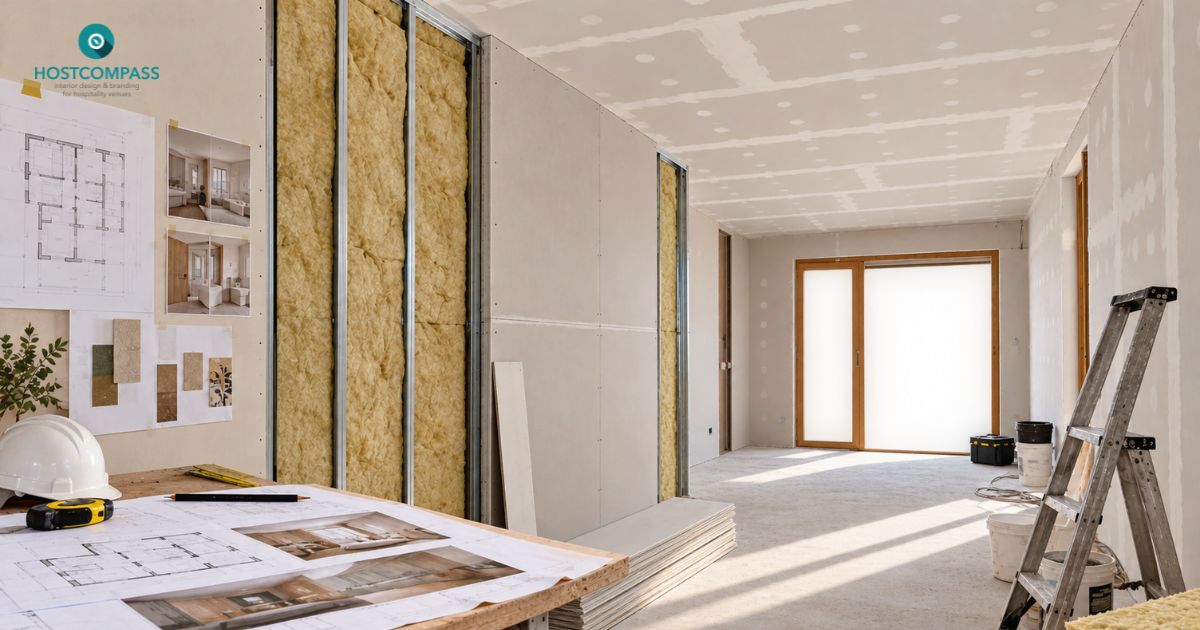
If you manage a hospitality property or accommodation business, you have probably already noticed something that has become increasingly evident: renovation remains a significant investment — and it comes at a cost.
The cost is not limited to materials. Labour, transportation, lead times, technical requirements, unexpected issues and successive changes can all have a significant impact on the final project budget.
What does this mean for an owner or property manager looking to upgrade the properties they manage? Simply that there is little point in waiting for the “right moment” when prices return to previous levels.
The question is not “how can I spend less?” but “where is it strategically worth investing?” — so that every euro has a meaningful impact on the space.
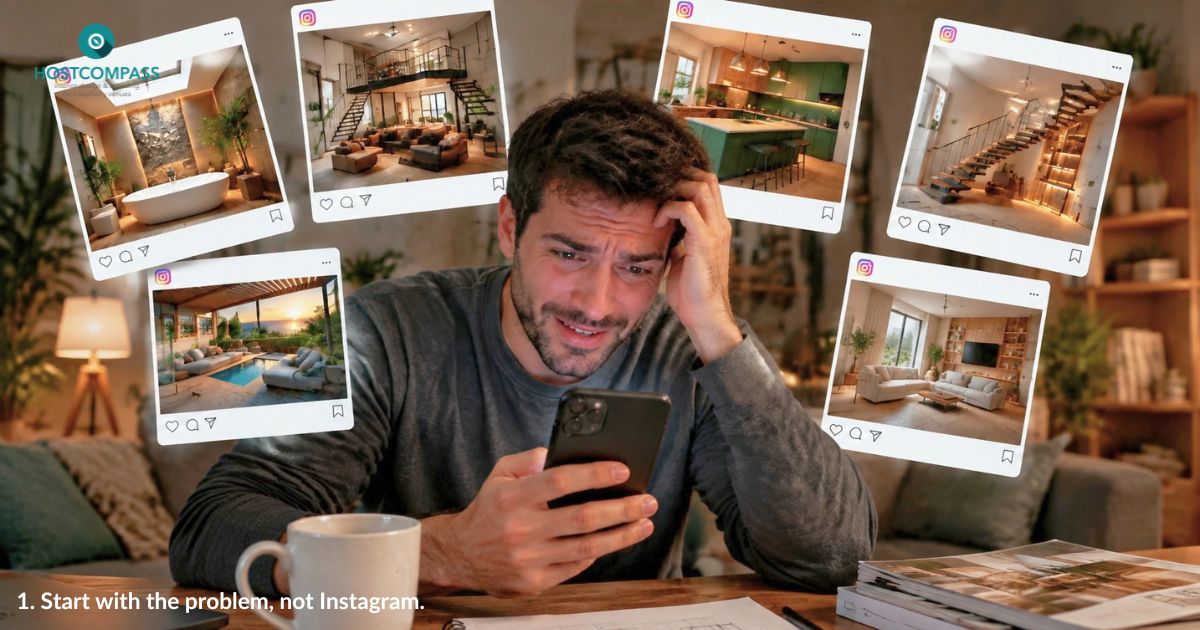
1. Start with the problem, not Instagram.
One of the most common mistakes in a renovation is starting with the image we want to create rather than the problem we need to solve.
A particular tile, colour, light fixture or piece of furniture may be exciting, but the real issue may be poor room flow, insufficient storage, inadequate lighting, an outdated bathroom, an uninviting entrance, an underused outdoor area, or an overall image that no longer reflects the property's price level and target audience.
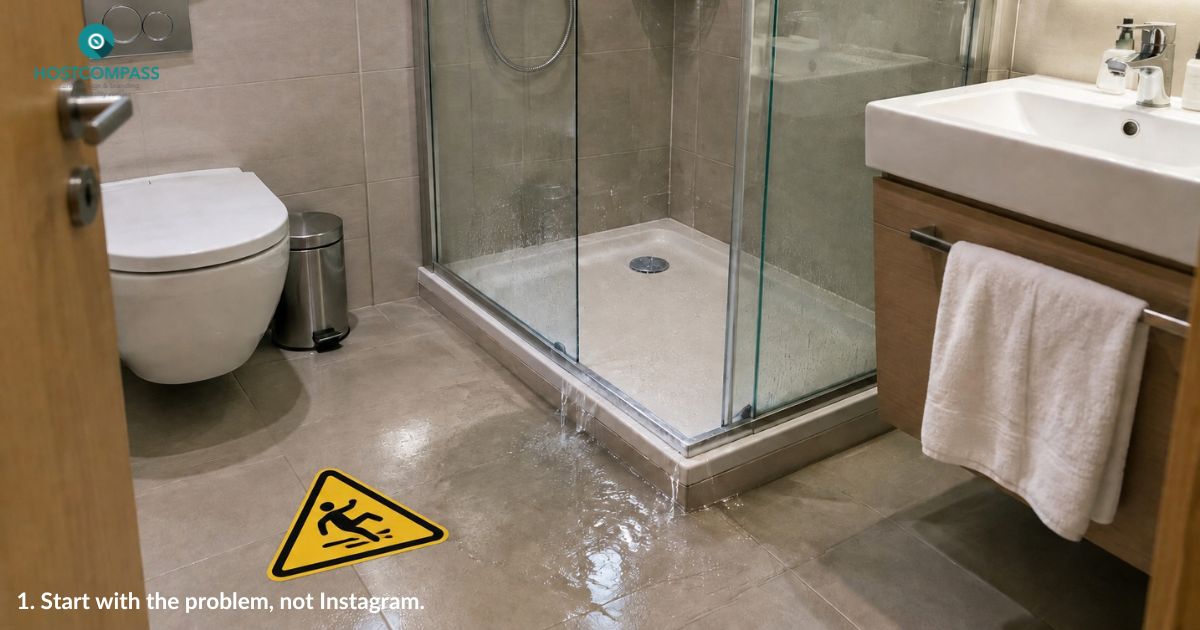
Renovation creates value when it solves a problem.
Without this analysis, there is a risk of investing in individual elements that look beautiful but do not meaningfully improve the guest experience.
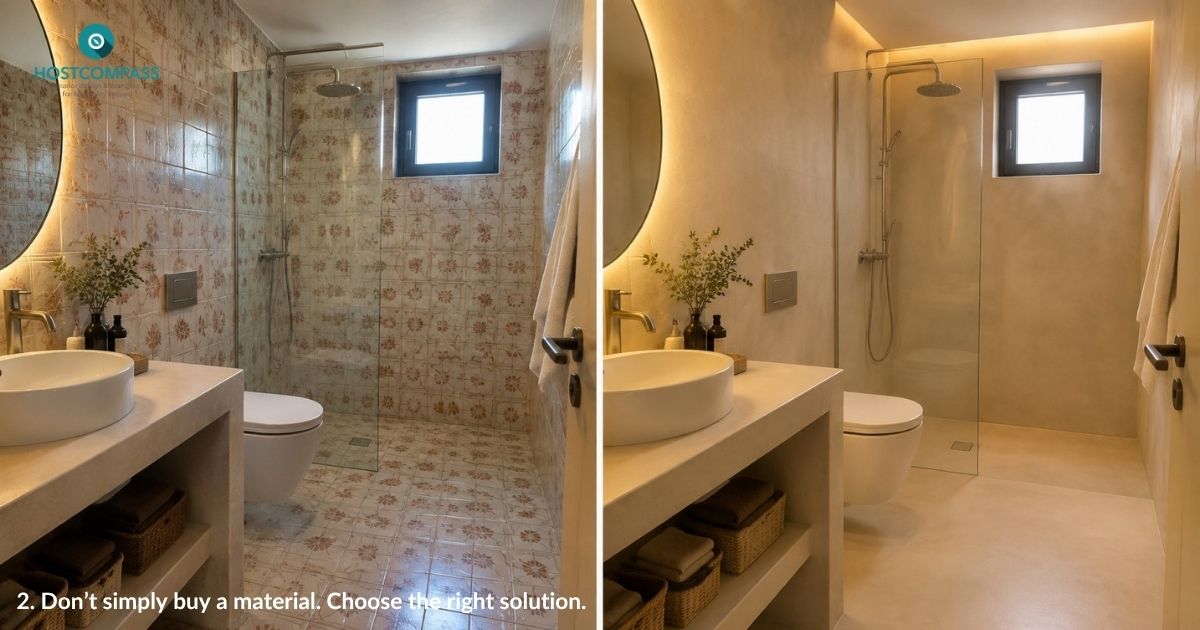
2. Don’t simply buy a material. Choose the right solution.
The purchase price of a material does not, by itself, represent its actual cost. A material may appear affordable per square metre but prove more expensive to install. Conversely, a more expensive option may offer easier installation, shorter construction time, greater durability or lower maintenance requirements.
Look at the complete picture: material cost + labour + preparation + waste + installation time + maintenance + lifespan.
This is how you understand the real cost of a solution and the value it delivers. This is also where modern material technologies and new surface solutions become particularly interesting. Under the right conditions, they can transform a space without requiring the same construction process as a complete replacement.
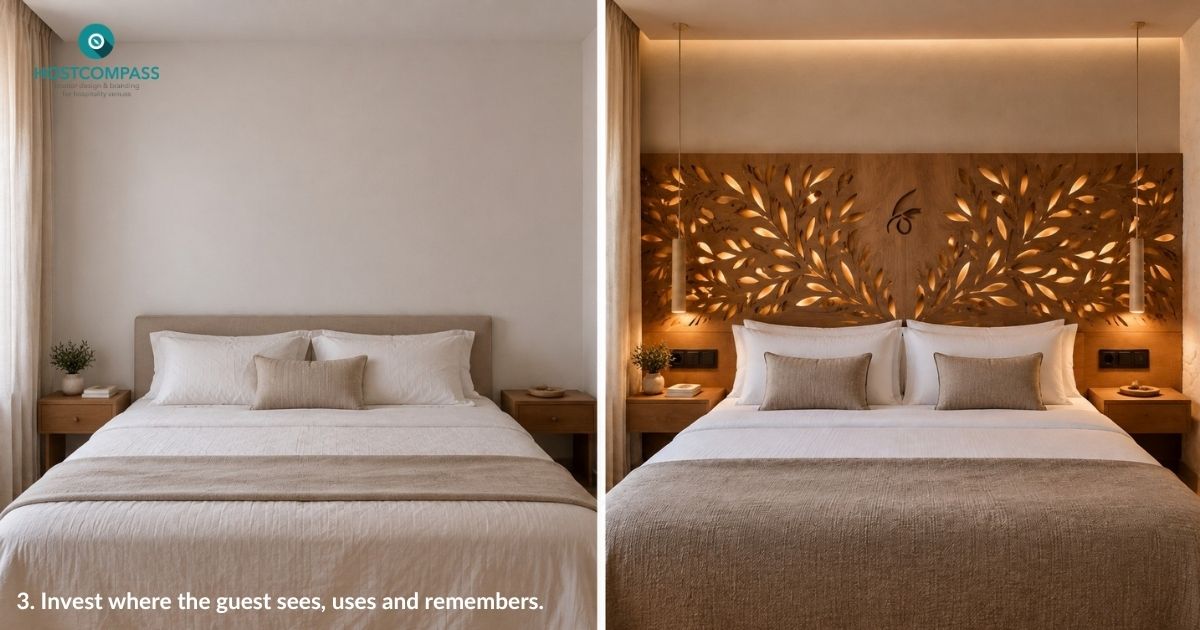
3. Invest where the guest sees, uses and remembers.
When the budget is limited, one of the most useful ways to decide where to invest is to look at the property through the guest’s eyes.What do they see first when they arrive? Which areas do they photograph? Where do they spend the most time? What do they use every day? Which points could create disappointment or negatively affect their experience?
The answers vary depending on the type and positioning of each property. In a city apartment, for example, the kitchen, bathroom, lighting and spatial ergonomics may have greater importance. In a Cycladic villa, the entrance, relationship with the view, outdoor areas and connection between interior and exterior may be far more significant. In a small boutique hotel, the reception area, guest rooms, lighting and first-impression points can strongly shape the overall experience.
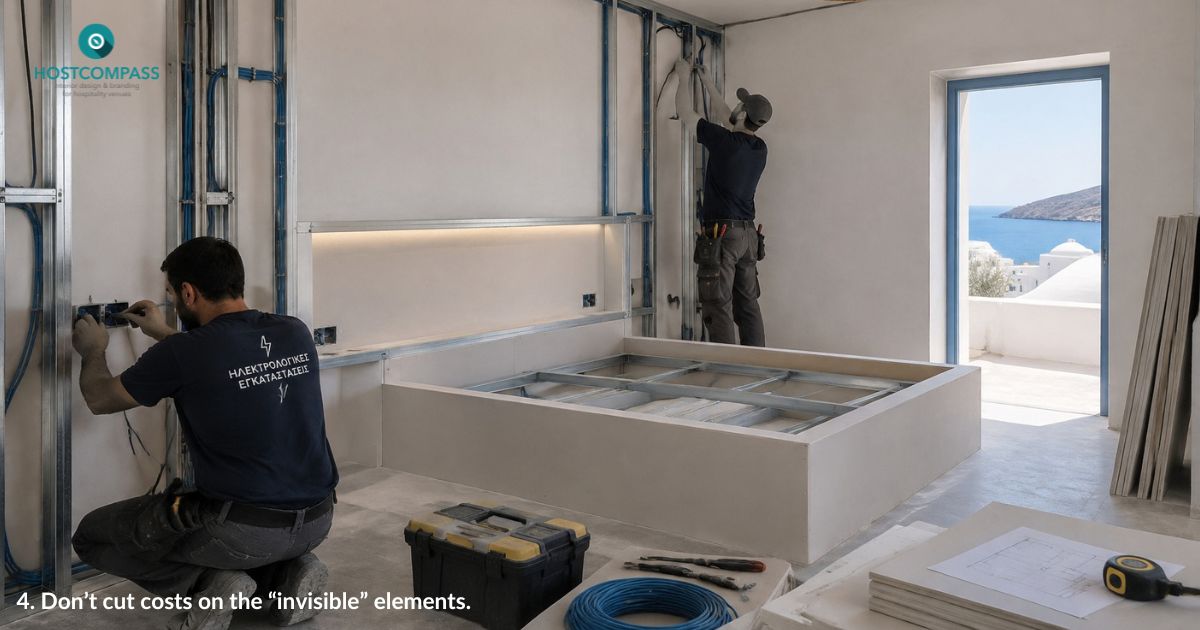
4. Don’t cut costs on the “invisible” elements.
A cost-effective renovation strategy does not mean that every element of a project is negotiable. Some interventions may not be particularly visible to guests, but they are essential to the long-term performance of a property: plumbing, waterproofing, electrical installations, ventilation, insulation, slip-resistant flooring and automation infrastructure all form the foundation of a project.
They may not appear in the property photographs, but they are often the elements that can create the most serious problems when handled poorly. A beautiful bathroom with inadequate waterproofing and acoustic insulation is not a cost-effective renovation. It is simply postponing a much more expensive problem.
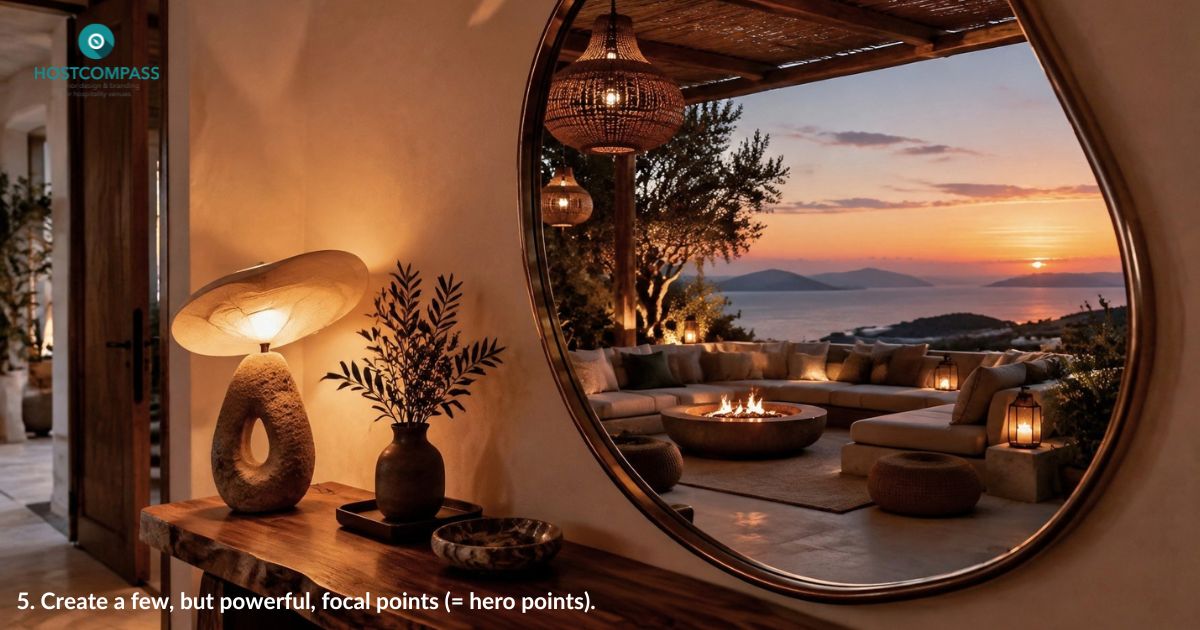
5. Create a few, but powerful, focal points (= hero points)
Every property has certain elements that can create a much higher perceived value than their actual cost. These could be a distinctive light fixture, an oversized mirror, a custom-designed headboard, a carefully designed bathroom or an outdoor setting that creates a complete experience.
Not everything needs to be spectacular. The key is to place the right elements in the right locations and allow them to act as focal points within the space. Some attract attention, while others create images and memories. That is why two or three carefully designed focal points can have a greater impact than a collection of expensive and scattered choices.
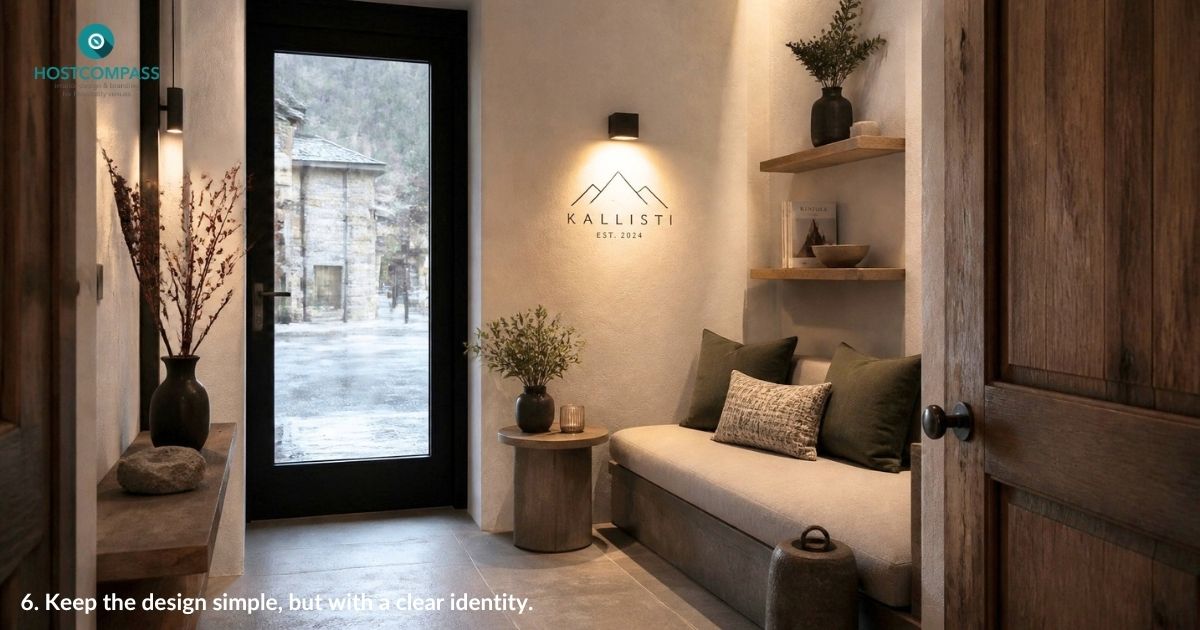
6. Keep the design simple, but with a clear identity
One of the most expensive mistakes in a hospitality space is trying to incorporate every interesting idea into a single project. Too many materials, textures, colours, lighting fixtures, decorative elements and competing ideas can increase costs without adding corresponding value to the final result.
A strong hospitality interior often needs much less: a clear concept, a consistent colour palette, a well-defined identity and the right materials. Simplicity is not a lack of design.It is design discipline. And when the budget is limited, that discipline becomes even more important.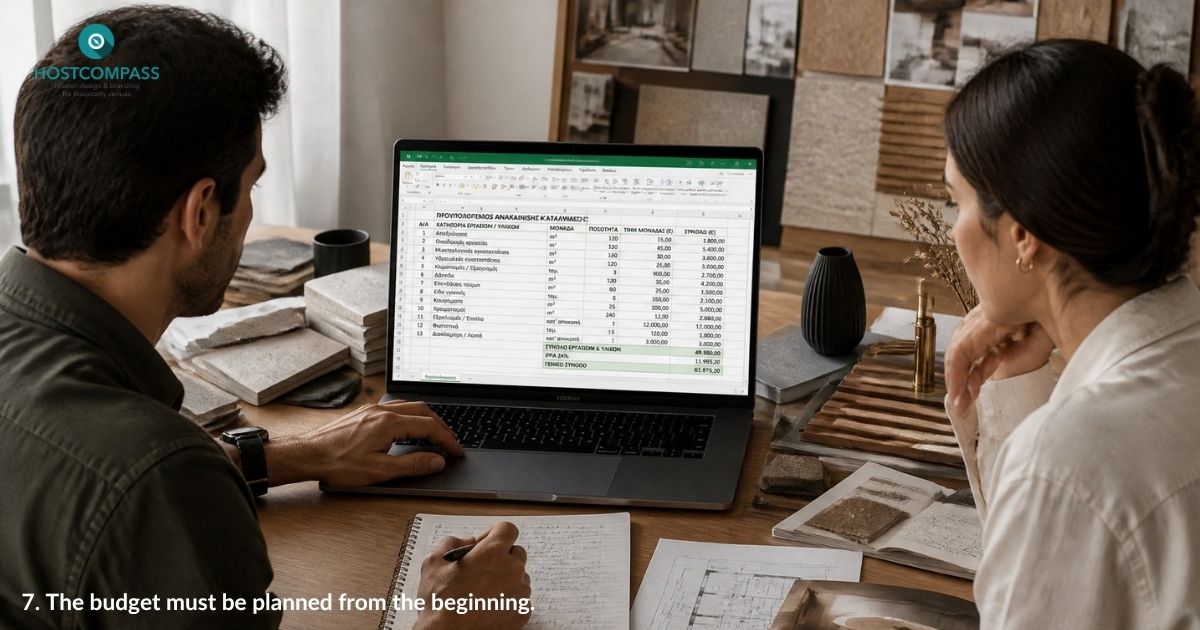
7. The budget must be planned from the beginning
Another common mistake is completing the design and only discussing the budget once contractors’ and suppliers’ quotations arrive. That is when the cuts begin: one material is replaced, an element is removed, a detail is simplified, something is postponed. The problem is that when cuts are made individually and without an overall strategy, the project can lose its original coherence.
A much more effective approach is to establish a budget strategy from the very beginning of the design process, so that the intervention can meaningfully improve the property's image, increase perceived value, create stronger photographic content, improve functionality, reduce future repairs or support a different and higher positioning.
Likewise, an element that is cut today but requires replacement or additional work shortly afterwards may ultimately prove more expensive.
In conclusion…
It is not realistic to expect renovation costs in Greece to suddenly become cheap. Nor is the solution simply to search for the cheapest material or continuously reduce the budget.The real challenge for a property manager or accommodation owner is to change the way we approach renovation. Renovation is no longer simply a series of expenses that need to be reduced.
It is a strategic investment with clear priorities.

Evangelia Papadimitriou


