


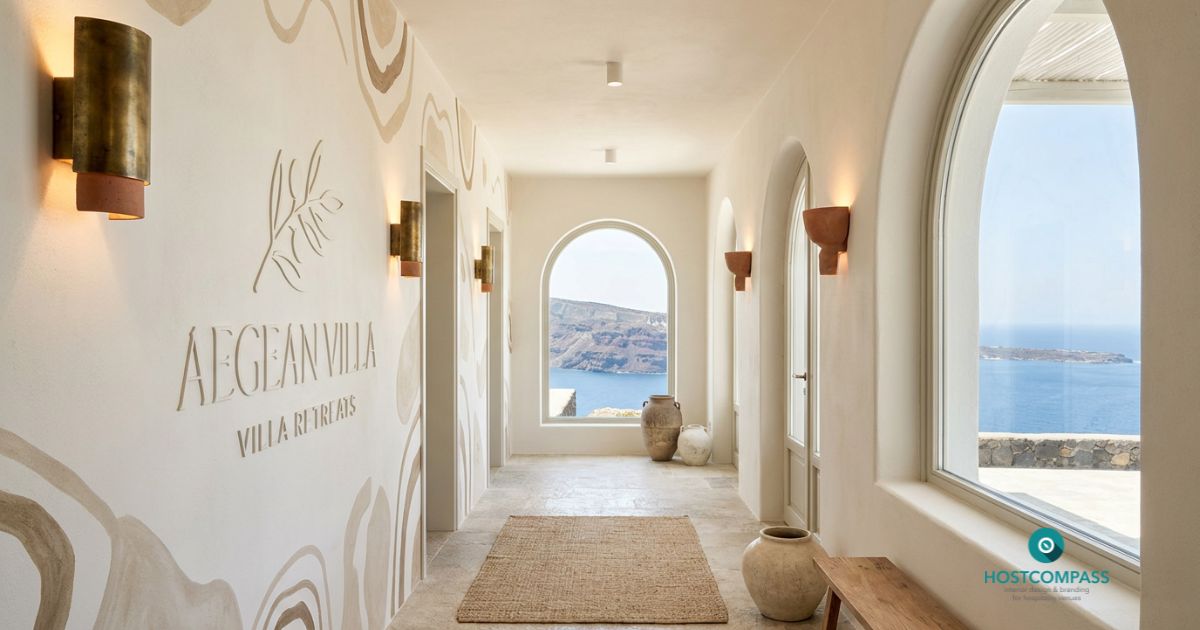
What do we usually think about corridors? That they are wasted square meters, lacking identity, often with a “hospital-like” aesthetic. Yet a corridor can evolve from being merely functional into an experiential space that increases the commercial value of an accommodation or property.
Here are 3 strategic ideas to help you see corridors differently—elevating the perception of the room to a boutique level without high material costs.
1. The Corridor Reimagined as a Curated Gallery Experience
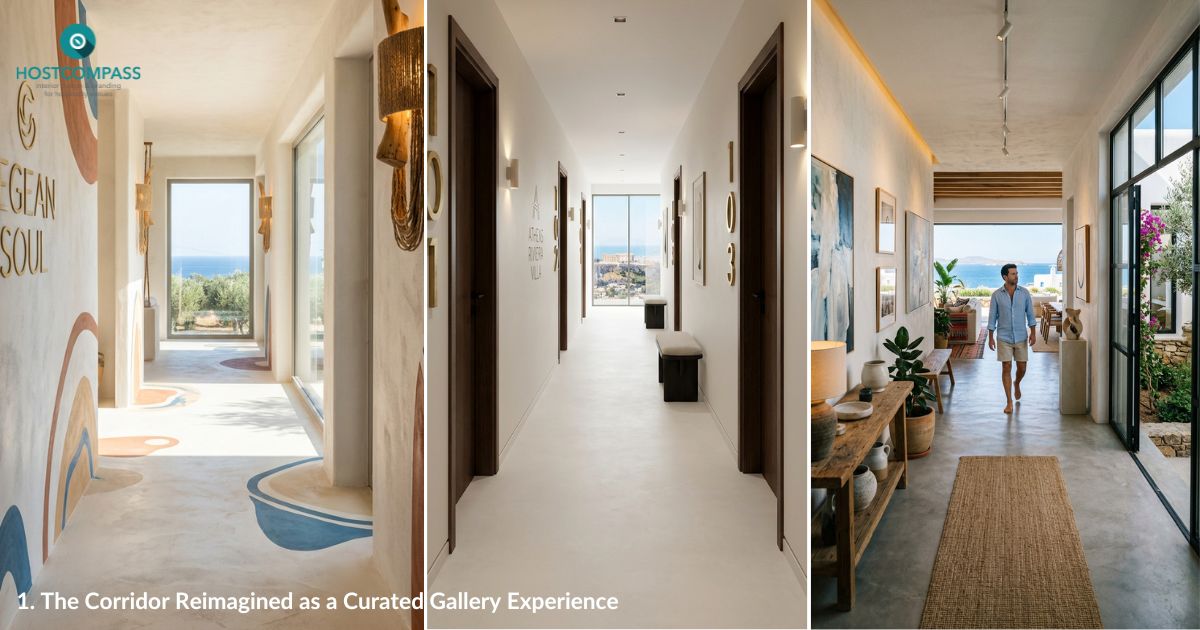
Apply artworks, abstract patterns, visuals connected to the logo and hospitality concept, and graphic applications on white or off-white walls.
You can incorporate small quotes, custom signage with room numbering or naming, and create a specific rhythm through linear ceiling lighting or integrated wall fixtures to evoke a gallery atmosphere.
Install the visual elements from mid-wall height and above, while applying wallpaper, wooden slats, or decorative surfaces below for durability and protection from luggage impact.
What this achieves:
• Communicates the accommodation’s aesthetic before guests enter the rooms
• Tells the story of the property
• Creates anticipation and a sense of surprise before room entry
• Strengthens the brand identity
• Generates Instagrammable photo spots
2. The Corridor as a Revenue-Generating Pause Point
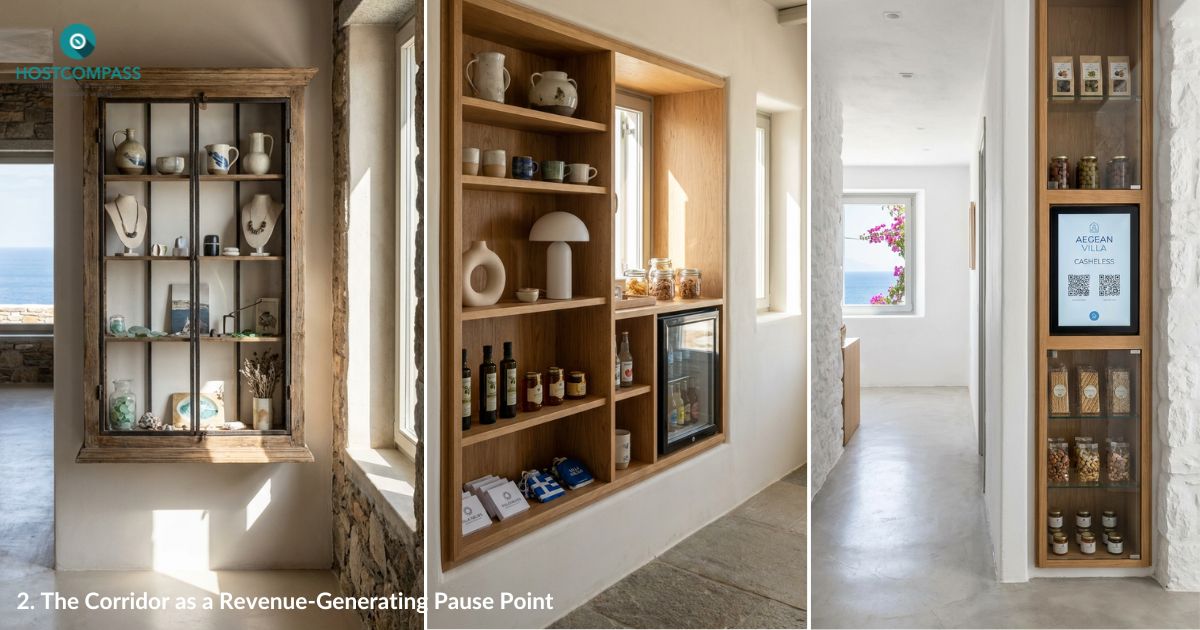
Introduce a distinctive display cabinet or presentation furniture featuring local products or art objects—such as ceramics, small design pieces, branded souvenirs—or create a mini self-service station with water, refreshments, or snacks.
Use accent lighting in niches or showcases to stimulate purchase intent and enhance product visibility. Integrate a cashless payment system and QR codes leading to product or brand information.
What this achieves:
• Reinforces the hospitality brand through personalized objects and treats
• Enhances the feeling of care and guest experience
• Increases the average spend per guest
3. The Corridor as the Spatial Introduction to the Guest Room
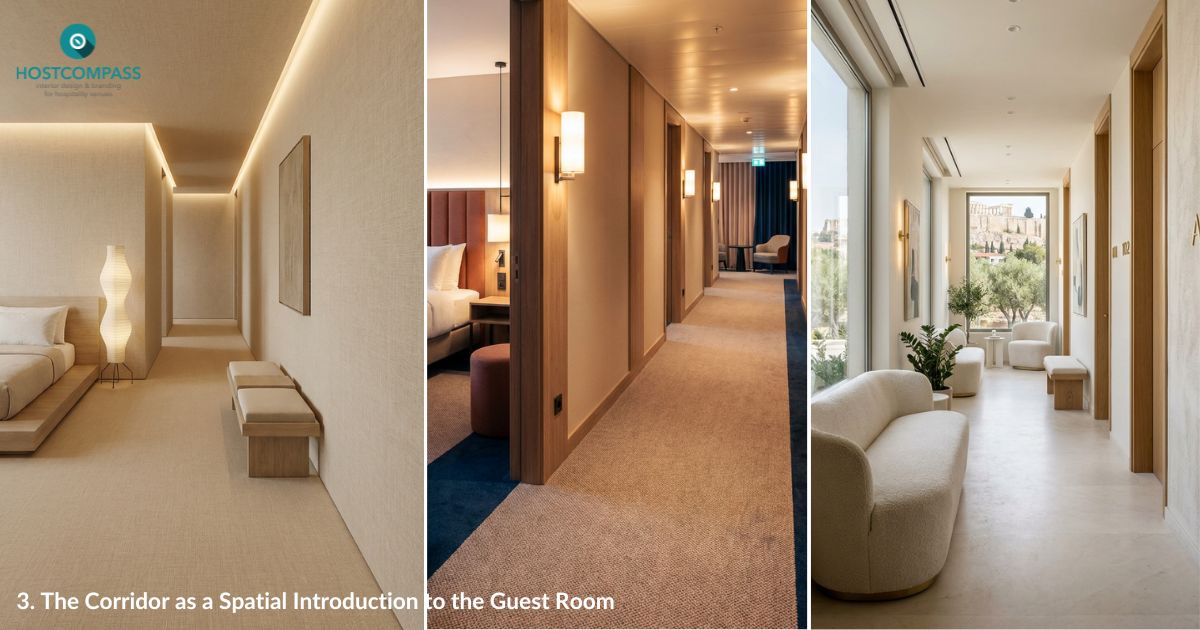
Apply the same color palette, lighting temperature, and aesthetic language as the guest room. Create a smooth psychological transition from the exterior to the interior, giving the impression of a larger space.
Use wooden cladding, consistent textures, identical materials—even the same interior scent—while allowing lighting to guide the experience.
What this achieves:
• Ensures a seamless transition from public to private space (the bedroom)
• Reduces the sense of a “narrow” corridor
• Enhances relaxation from the very first step
To sum up...
Corridor design can elevate your project and its commercial value into a premium category—without increasing square meters or operational costs—simply by transforming it into a storytelling tool for STRs and hotels.
Because in practice, we are not decorating “wasted” square meters—we are selling the living experience


